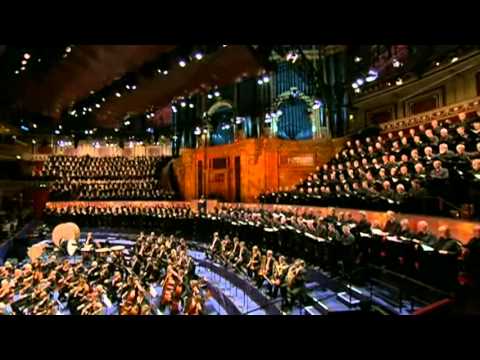
Loading YouTube player…
Giuseppe Verdi
Dies Irae
Read
Next narration 0:09
Narration sentence highlighting is idle.
After the silent lead-in, the mass has arrived: low drum weight underneath, brass glare above, and the choir pressing into the front.
The voices shift from block attacks into fast running motion, while the strings keep the floor racing underneath.
The choral attacks become clipped and rhythmic, riding the same drive instead of spreading into long sustain.
The texture is not just loud now; it is held loud, with upper brass and voices fused into one bright surface.
The force falls back suddenly; the choir remains, but the room opens around thinner strings and low winds.
Now the pulse is mostly suggestion: low taps, tremolo, and close choral attacks that barely leave the surface.
The voices are gone; a distant brass call draws the hall space into the phrase.
Answering brass lines begin to stack, still separated by hall air, but the pattern is gathering density.
The fanfare widens into several registers, bright at the top and thicker through the middle.
When the choir returns, it comes forward as a mass again, locked to brass and percussion rather than floating behind them.
The cut is sharp enough to make the hall reverb feel like the remaining instrument.
A single low voice enters that emptied room, close-grained and heavy without much accompaniment.
The low line descends and thins; sustained strings hold a dark floor under it.
At the end, the last resonance settles into the room instead of closing with another attack.
Last updated Aug 28, 2026 · Written with GPT-5.5 · Galdr 0.7.0 · Inner Ear gemini-3.7-flash

galdr analysis
Click play to load galdr data.
Now playing
Dies Irae
Giuseppe Verdi
Click play to load galdr data.
Music signal
Surface evidence
Harmony + melody
galdr concepts
Derived motion