Giuseppe Verdi
Dies Irae
Read
Narration sentence highlighting is idle.
0:00–0:08 — The orchestra opens at full force
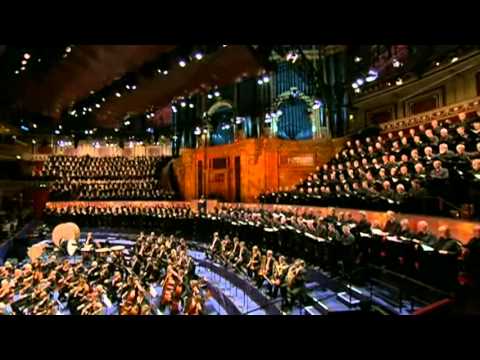
Five seconds of hall air, then the ensemble arrives as a single blow: swirling brass, bass drum, rushing strings. The piece establishes its maximum scale before a voice exists.
0:08–1:32 — Chorus states the refrain, then restates it whole
The choir enters hard on Dies irae, dies illa, carrying the first stanza and the Quantus tremor stanza end to end over pounding timpani and string figures (0:08–0:48). From 0:53 the same two stanzas return complete, stretched wider and cresting in a sustained fortissimo stretch near 1:18. The repetition is the formal event: no new material arrives — the refrain is established by coming back intact.
1:32–≈2:25 — Sudden withdrawal into hammered fragments
The scale drops sharply just after the restatement ends. The same dread text returns small — tense, quiet lines over low strings and sparse bass-drum taps — and from about 2:05 the chorus breaks its closing words into obsessively repeated fragments of Cuncta stricte. The section narrows to syllables and delays whatever is coming next.
≈2:25–4:08 — Offstage trumpets summon the largest return
While the choral fragments still land, a distant trumpet calls and another answers across the hall; more brass join into a rolling fanfare (≈2:45–3:05). At 3:25 the chorus re-enters at full force beside the trumpets on Tuba mirum spargens sonum, drives through Coget omnes ante tronum, and reaches the recording's peak — then breaks off hard around 4:05, leaving only reverberation. The summons converts the thinning passage into expectation; the return spends it, and the cut withholds resolution.
4:08–5:00 — A solo bass voice takes the close
Several short silences (≈4:11, 4:18, 4:25) frame the entrance of a solo bass voice, low and nearly alone, on Mors stupebit et natura around 4:15. Quiet choral answers follow on Cum resurget creatura and Judicanti responsura; the solo line descends to its cadence near 4:45, and the final seconds settle into decay with no return of the opening mass.
The five minutes trace one continuous turn: massed statement, hollowed repetition, offstage summons, full return, and a single voice left at the end.
Last updated Aug 28, 2026 · Written with GLM 5.2 · Galdr 0.7.0 · Inner Ear gemini-3.7-flash
Now playing
Dies Irae
Giuseppe Verdi

galdr analysis
Click play to load galdr data.