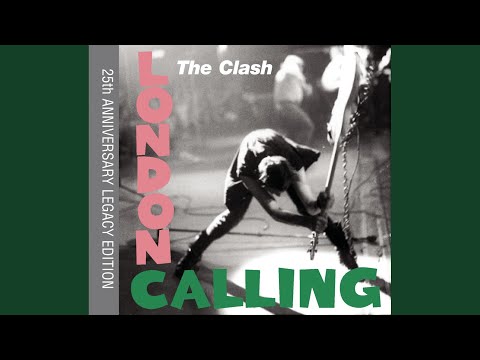
The Clash
London Calling
Read
Next narration 0:04
Narration sentence highlighting is idle.
The track opens with a lone guitar and a siren-like wail before the full band comes in.
The voice enters like a call sign. "London calling" isn't just a hook here; it sounds like the station coming on the air.
That Beatlemania line cuts through the nostalgia, and the band doesn't soften around it; the same hard step keeps going.
When he says there's no swing except the truncheon, the guitar scrape and low bass make the joke feel mean and physical.
The words get enormous now—ice age, sun, meltdown—but the music stays down on the street, still clipped and steady.
The drowning line lands, and then the river line puts the singer inside it, not safely reporting from somewhere else.
The call sign starts another pass through the song, but the target shifts: imitation, being alone, bodies barely awake.
The disaster sequence comes back without a big musical rupture. That's part of the force: the band keeps the pressure level while the images worsen.
After the river line, the vocal space opens out, but the track doesn't relax; the dark groove keeps carrying the same forward weight.
The ice-age words return again, now feeling less like a new warning than a report that's been cycling on the same frequency.
That last river repeat matters: the phrase is familiar now, and it has turned from announcement into testimony.
"Now get this" is such a small vocal gesture, but it changes the address; he's pulling the listener closer before the final claims.
Now the broadcast has a witness inside it: "I was there, too," sung over the same severe drive.
At the top of the dial, the title phrase feels like a signal pushed as far as it can go.
The ending starts to fray around this repeated vocal fragment; the pattern loosens, and the signal finally gives way.
Last updated Aug 17, 2026 · Written with GPT-5.5 · Galdr 0.7.0.dev0 · Inner Ear Gemini 3.5 Flash Lite
Now playing
London Calling
The Clash

galdr analysis
Click play to load galdr data.