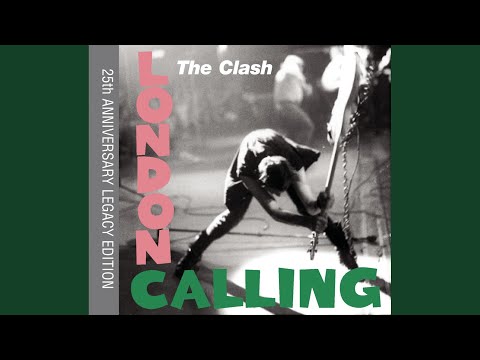
The Clash
London Calling
Read
Narration sentence highlighting is idle.
0:00-0:21 Establishes the contract
The opening sets the song’s working frame before the voice arrives: a hard, steady band pattern with little formal suspense about the pulse. It does not build toward a separate drop so much as install the track’s main terms early, letting the vocal enter into a machine already running.
0:21-1:04 Introduces the broadcast and proves the refrain
The lead voice enters with London calling, turning the established pattern into an address. The first long stanza keeps returning to that call while the lyric field widens from towns and underworlds to collapse images. The section’s formal hinge is the first arrival of London is drowning / I live by the river, which functions less like a chorus lift than a refrain that locks the warning into a memorable answer.
1:06-1:49 Reloads the same form with a second address
A second vocal cycle begins without a major reset. The repeated London calling frame matters because it confirms the song’s structure: new targets and images are fed through the same urgent announcement pattern. The return to London is drowning / I, I live by the river makes the refrain feel fixed, not incidental.
1:49-2:18 Opens a break without losing the grid
After the second refrain, the vocal center gives way to an instrumental stretch and wordless vocal material. The form opens sideways rather than relaxing; the pulse and band pattern remain continuous, so the break functions as a held extension before the song can restate its central warning.
2:19-2:47 Returns the refrain, then delays the final address
The apocalyptic refrain comes back directly at 2:19, shortening the route to the song’s core claim. After I live by the river, the music continues into a brief delay, holding the established drive while the voice prepares the late interruption: Now get this.
2:48-3:19 Coda reframes and cuts off
The final vocal section narrows the broadcast into testimony: yes, I was there, too, then pushes London calling one more time at the top of the dial. Around 3:11 the closing line breaks the main song frame, and the track empties quickly after the last held impact rather than resolving into a full final chorus.
Last updated Aug 17, 2026 · Written with GPT-5.5 · Galdr 0.7.0.dev0 · Inner Ear Gemini 3.5 Flash Lite
Now playing
London Calling
The Clash

galdr analysis
Click play to load galdr data.