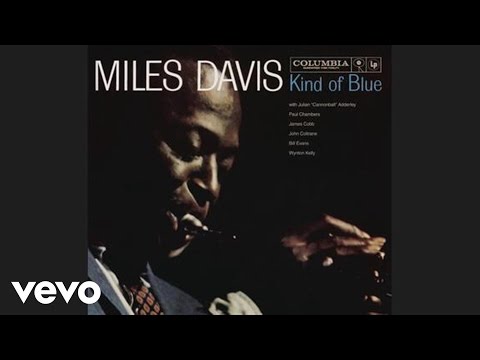
Miles Davis
So What
Read
Next narration 0:05
Narration sentence highlighting is idle.
The opening is not decoration. Piano and the low figure are building the room before the famous answer arrives.
The space matters as much as the notes. Every attack leaves air around it, so the frame feels cool and deliberate.
Now the head steps in. The call and answer are almost bare, but the whole performance will grow from this economy.
The groove has found its floor. The ride cymbal keeps the top moving while the low line keeps returning to ground.
Notice how little the theme needs to do. The band is making a strong structure out of restraint, not volume.
Miles enters by taking less space than he could. The dry trumpet tone makes each short phrase sound chosen.
The pauses after his phrases are active. They let the rhythm section stay visible underneath the solo.
The modal center is why small turns feel large. The room mostly stays still, so each deviation changes the light.
Here the line climbs, then drops back into the frame. The solo is testing freedom without breaking the contract.
The surface is busier now, but the pulse has not lost its calm. Heat is rising inside the same narrow corridor.
Piano flashes and cymbal motion keep the room alive. Nothing has to crowd the center for the pressure to build.
The next horn voice brings more grain into the frame. The track grows sharper without giving up its coolness.
The form keeps absorbing angles. Every phrase can lean away because the ground below it keeps returning.
This is the deep middle of the performance. The band is showing how repetition can create room instead of closing it.
The pressure begins to ease, but the floor remains. The music is preparing the return by thinning, not by announcing it.
When the head comes back, it sounds newly earned. The same answer has survived the long solo field.
The low figure and horn response are still spare, but now they carry memory. The room has more charge around the same shape.
The return does not try to summarize the solos. It proves that the original frame was large enough to contain them.
Now the texture begins to empty. The band is letting the space loosen one layer at a time.
The pulse is still present, but attention is already releasing. The music is giving up the room without drama.
This late stretch is almost all trust. No grand ending is needed because the frame has already made its case.
The final answer lands cleanly. The performance stops as if it has simply finished holding the conditions open.
What remains is the track's quiet argument: freedom can be most audible when the frame is narrow and trusted.
The last seconds leave that restraint in the air. The music does not resolve so much as step away from its own cool center.
Last updated Aug 2, 2026
Now playing
So What
Miles Davis

galdr analysis
Click play to load galdr data.