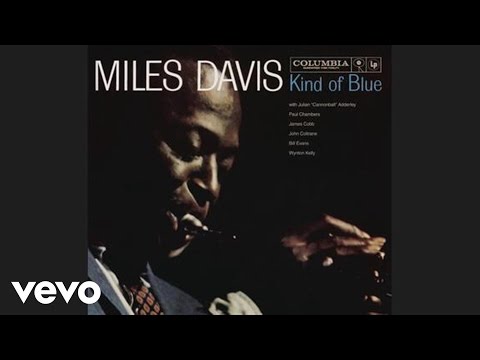
Miles Davis
So What
Read
Narration sentence highlighting is idle.
"So What" makes freedom sound less like escape than consent to a frame. The piece is modal and famously economical, but the feeling is not theoretical. The ear hears a band choosing narrow conditions and then discovering how much personality can move inside them.
The opening matters because it refuses hurry. Piano and low line create a threshold where attention has to slow down before the head arrives. When the answer phrase finally enters at 0:39, it is almost casual, but that casualness is the point. The track is asking how little can be said while still changing the room.
Miles's solo after 1:58 gives the answer in human terms. He leaves space around his phrases, and those spaces are not empty. They let judgment show. A crowded performance would make virtuosity the subject; this one makes choice audible. Every pause says that the player trusts the ground underneath him.
The later solos complicate that trust. More notes arrive, more angles press against the pulse, and the band absorbs the pressure without losing the cool center. That is the meaning the recording earns: freedom is not proved by breaking the form. It is proved by returning to it with more life in it.
When the head comes back after 7:06, the phrase is still spare, but it no longer sounds merely spare. It sounds inhabited. The final release leaves the same lesson hanging in the air: restraint can be generous when the players know exactly what it is protecting.
Last updated Aug 2, 2026
Now playing
So What
Miles Davis

galdr analysis
Click play to load galdr data.