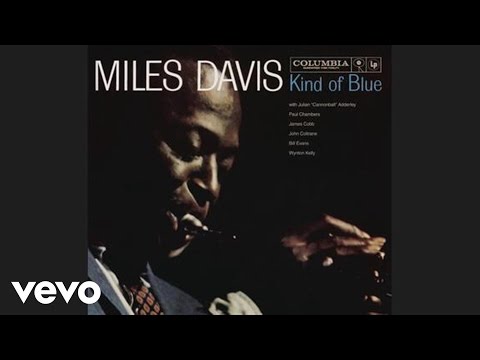
Miles Davis
So What
Read
Narration sentence highlighting is idle.
"So What" sounds spacious because every instrument leaves edges around itself. The opening piano and low figure do not fill the room. They draw its walls. The recording is bright but not glossy, with a dry center that makes each attack feel deliberately placed.
At 0:39, the head turns that space into a body. The call-and-answer phrase has a springing weight, and the drums keep the surface lightly alive instead of pinning it down. The groove is clear enough to stand on, but it keeps a trace of suspension. That is why the track can feel relaxed and alert at the same time.
Miles's entrance after 1:58 changes the sound by subtraction. His trumpet tone is close, centered, and unsentimental. He does not need a crowded line to claim the room. The rhythm section answers by staying loose and exact: ride cymbal shimmer above, low motion below, piano flashes appearing only when the harmony needs a quick glint.
Through the long middle, density rises without becoming clutter. The saxophone lines add more grain and more forward pressure, but the track keeps its clean separation. Even when the surface gets busier around 4:01, the ear can still feel the original floor underneath. The sound argument is discipline under heat.
By the return after 7:06, the same timbres have changed charge. The head is not louder as an object, but the room around it has been activated by everything that passed through. The ending thins the sound one layer at a time until the final stop feels like the band simply stops holding the air open.
Last updated Aug 2, 2026
Now playing
So What
Miles Davis

galdr analysis
Click play to load galdr data.