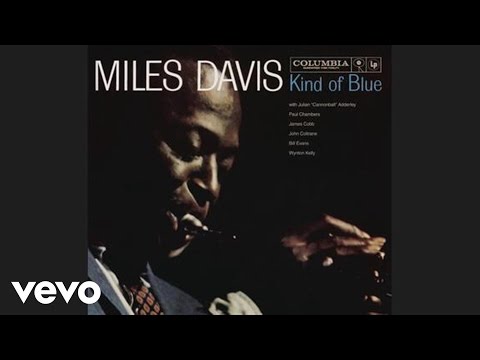
Miles Davis
So What
Read
Narration sentence highlighting is idle.
0:00-0:39 Threshold and answer
The structure begins before the famous answer. Piano and low line build a cool vestibule, almost ceremonial but never heavy. By 0:39 the head has arrived, and the short call-and-answer figure gives the whole performance a rule: very little material, held with complete confidence.
0:39-1:58 Head and open floor
The head does not behave like a dramatic theme. It marks the floor, states the modal corridor, then leaves room for the band to move inside it. The important structural fact is restraint. The track establishes a frame strong enough that small turns can carry real consequence.
1:58-4:01 Solo corridor
Miles enters a space that is already stable. His solo phrases are short, dry, and separated by air, so the rhythm section remains visible under every gesture. The form is not rushing toward contrast. It is testing how much change can happen without leaving the room.
4:01-7:06 Pressure inside the same form
The later solos press more angles into the corridor. The pulse stays regular, the surface brightens and thickens, and the modal center makes each deviation feel larger than its size. The structure holds because the band treats intensity as motion within a frame, not escape from it.
7:06-9:23 Return and release
When the head returns, it sounds newly proven. The same economical answer now carries the memory of the long solo field. After 8:39 the form starts to empty, and the final break near 9:19 releases the space without turning it into a theatrical ending.
Last updated Aug 2, 2026
Now playing
So What
Miles Davis

galdr analysis
Click play to load galdr data.