Purcell
Dido's Lament
Read
Narration sentence highlighting is idle.
A little air is allowed to stand before the music fully claims it, and that matters: the first phrases feel already weakened by space. The soprano enters softly over bowed strings, not with theatrical announcement but with a covered, inward tone, as if the room has narrowed around her. In Thy hand, Belinda, the words ask for human contact while the accompaniment keeps its own slow gravity underneath. The pauses between phrases are not empty breaks; they let the line fall back into the string warmth, then rise again with less strength than before.
Through the opening recitative, the voice moves in careful arcs, cresting only briefly before yielding downward. Death is named, and the music does not suddenly darken for the word because the darkness has been present from the start: the subdued string body, the low harmonic pull, the way each vocal phrase seems to spend itself as soon as it reaches height. Around 0:55, after a cadence and a longer breath of quiet, the return feels less like continuation than like someone gathering enough voice to finish a thought.
The great ground begins to show its full power when When I am laid arrives near 1:12. The descending bass is steady enough to hold the body, but it is not a dance floor; it is a measured sinking. The soprano’s line stretches above it, tender and controlled, while the strings repeat the fall beneath her, making every new phrase inherit the same downward fate. That is the cruelty of the pattern: the voice can rise, plead, soften, decorate, but the bass keeps remembering where it is going.
The repeated plea that her wrongs create no trouble in Belinda’s breast turns the music into an argument against its own pain. The words ask not to burden the living; the sound keeps producing burden anyway, in the suspensions, in the drawn-out syllables, in the way the voice leans into a note and then releases it as if release costs something. Around 1:53, when the opening aria text returns, it is recognizably the same descent, but the earlier pass has changed it: the repetition no longer introduces death, it inhabits it.
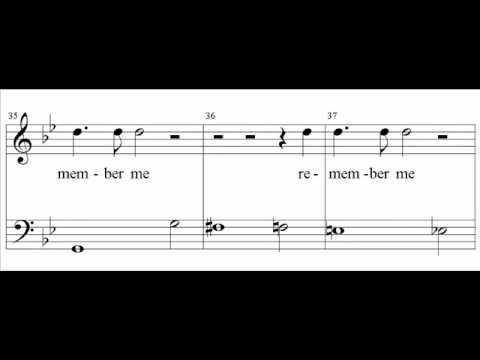
Then the aria finds the wound it cannot keep covered. Remember me begins near 2:34, and the phrase has a different human voltage: more direct, less protected by formal distance. The voice does not need to grow large to become devastating. It swells modestly, brightens at the crest, then softens again, while the strings keep their grave circulation underneath. The line’s contradiction—remember the person, forget the fate—does not resolve musically. The melody lifts toward memory; the bass keeps lowering the body back toward earth.
Each later return of Remember me feels more exposed because the accompaniment refuses rescue. Around 3:25 the voice presses into the phrase with warmer intensity, vibrato carrying the strain without turning it into a scream. The music’s steadiness is what hurts: no rupture, no grand collapse, just the same falling ground receiving another attempt to be held in someone’s mind. The final repetitions thin the distance between aria and farewell until the singer’s sound seems almost to hover above the strings rather than stand on them.
After the voice leaves, the strings remain for a while, and the absence becomes the last event. The pattern loosens, the pressure drains, and by about 4:34 the small withdrawals in the sound feel like the music releasing its hold one finger at a time. There is no need for a final theatrical blow. The bowed resonance fades into silence, and the silence is plain enough.
Last updated Aug 18, 2026 · Written with GPT-5.5 · Galdr 0.7.0.dev0 · Inner Ear Gemini 3.5 Flash Lite
Now playing
Dido's Lament
Purcell

galdr analysis
Click play to load galdr data.