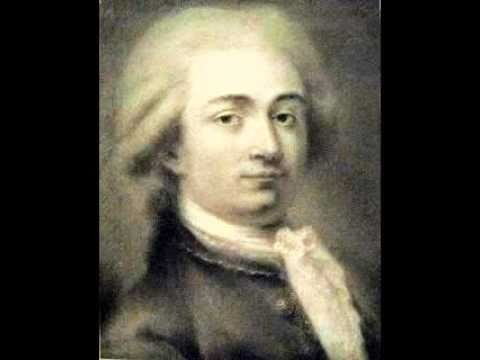
Vivaldi
Winter, Largo from The Four Seasons
Read
Narration sentence highlighting is idle.
A brief breath of silence, then the solo violin enters over a sparse pizzicato floor — two layers, almost nothing else, and that spareness is the entire climate. The plucked strings tick steadily underneath while the violin line moves in long, unhurried curves above them, and right away there is a tension between the two: the pizzicato keeps its grid with mechanical regularity, but the violin refuses to be pinned to it. The melody rises with vibrato, descends through smooth stepwise motion, sustains a high note that hangs and fades back into the accompaniment. Each phrase swells slightly, crests, and resolves into the background wash, and then the next one begins from roughly the same place. The weight stays suspended — not heavy, not light, just held — and the body catches the pulse without being asked to move with it. It is the feeling of being still while time ticks.
Through the first three minutes the violin keeps tracing these arcs — climbing, turning, descending, settling — while the pizzicato holds its position underneath unchanged. Phrase drops arrive at regular intervals, small moments where the melodic line steps back down and the surface thins momentarily before the next rise. Around 1:12 the texture gathers slightly more presence, the violin pressing into a brighter register, and the body locks a little firmer into the pocket. But the change is modest. The movement never leaves its two-layer architecture; it only leans deeper into it. The violin’s attacks bend and breathe around the beat, its expressive timing pulling against the steady plucked regularity, and that friction becomes the track's real motor, more than any harmonic motion.
At 3:30 the sound withdraws into silence — three seconds of near-nothing, the room decay fading to a held breath. When the violin returns, it re-enters with a warm, lyrical phrase that feels continuous with what came before, as though the silence were a pause between sentences rather than a new paragraph. The pizzicato resumes its tick. Phrases rise and descend through the same contour logic, the same suspended weight, the same friction between floating melody and grounded pulse. Another silence arrives near 5:52 — longer this time, four seconds — and the return after it carries more force, the violin re-emerging with a surer step. A brief pause at 6:23 interrupts the flow for less than a second, just enough to register as a catch in the phrase before the line continues.
The final stretch changes character. Beginning around 8:08, the silences multiply — short gaps of half a second to a second, scattered across the next thirty seconds like the phrase is being broken into smaller and smaller fragments. The violin enters, pauses, enters again. The pizzicato holds through most of these interruptions, but the melodic line becomes discontinuous, its arcs truncated. Then around 8:40 the texture steadies once more — the grid settles, the phrases resume their fuller shape, and for the last minute the movement holds its ground with little strain and quiet stability. Near 9:17 the attention finally releases. The violin sustains, the pattern breaks in a quick succession of small fractures, and the sound fades into room decay and then into nothing — not a dramatic close, just the last vibration leaving the string and the air letting go of it.
Last updated Aug 15, 2026 · Written with GLM 5.2 · Galdr 0.7.0.dev0 · Inner Ear Gemini 3.5 Flash Lite
Now playing
Winter, Largo from The Four Seasons
Vivaldi

galdr analysis
Click play to load galdr data.