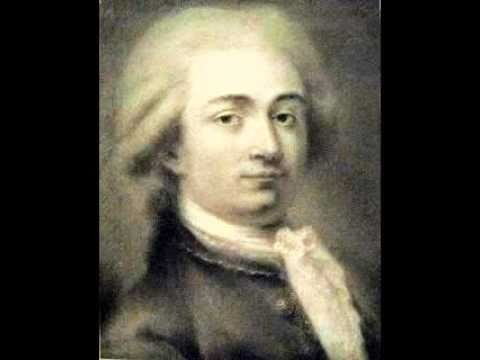
Vivaldi
Winter, Largo from The Four Seasons
Read
Narration sentence highlighting is idle.
The pizzicato strings arrive first — a sparse, even pulse, like rain ticking against a window. Then the solo violin enters above, and immediately there is a gap between the two worlds: the plucked strings keep their steady grid while the violin floats, turns, and lingers above it. That separation is the whole character of the movement. The violin never quite joins the pulse underneath; it hovers over it, sometimes rising with warm vibrato, sometimes descending through a smooth scale, always slightly free of the clock the accompaniment keeps. The weight stays suspended — nothing presses forward, nothing drags. It simply holds.
For the first two minutes the texture barely changes. The pizzicato maintains its even tread and the violin sings its long, curving phrases over the top, cresting and resolving with a gentleness that never strains. Around 1:12 the violin's phrases gain a little more surface activity — ornamentation, quicker turns, a brighter register — and the body settles deeper into the pocket the plucked strings have been holding. The grid underneath stays fixed, but the violin's freedom above it creates a quiet friction: you can feel the steady pulse, yet the melody keeps pulling against it, leaning into notes a moment longer than the barline would allow. This is not conflict. It is the sound of two kinds of time occupying the same room.
The first real interruption comes at 3:31, when the music withdraws into silence for a few seconds. When the violin re-emerges, the landscape has shifted — the phrases are warmer, more introspective, as though the silence gave the melody permission to turn inward. The pizzicato resumes its role underneath, but the violin now traces longer, more reflective arcs, descending slowly through calm passages, swelling softly before stepping back down. The returning section stretches over two minutes, and within it the violin's phrases become progressively quieter, more withdrawn, as if moving toward something it already knows.
A second silence arrives near 5:52, and this one resets more decisively. The re-entry carries more force — the violin returns with a grounded phrase, and the body locks back into the pocket with renewed clarity. For the next stretch the grid settles into its most stable runway: steady pulse and little forward strain, the violin and accompaniment finally moving in closer agreement. The friction that defined the opening has eased. The two kinds of time are nearer to each other now, and the music breathes more evenly because of it.
Near 8:08 the texture begins to fragment. Brief silences interrupt the flow — some less than a second, several clustered close together — and each time the violin re-enters, it sounds like a sentence restarting after losing its place. The pizzicato thins. The phrases shorten. Something that had been continuous is now coming apart at the seams, not dramatically, but the way a fire settles when the logs shift and the room goes quiet between cracks.
After the last of those silences, around 8:40, the grid steadies one final time. The violin resumes its singing over the plucked pulse, and for thirty-odd seconds everything holds again — the same suspended warmth, the same two-layered time. Then, near 9:17, the attention the music has been carrying begins to release. The violin's phrases loosen, the body lock recedes, and the pattern breaks apart in a series of small fractures until only room decay remains. The fire goes out not with a crash but with the last ember settling into ash.
Last updated Aug 15, 2026 · Written with GLM 5.2 · Galdr 0.7.0.dev0 · Inner Ear Gemini 3.5 Flash Lite
Now playing
Winter, Largo from The Four Seasons
Vivaldi

galdr analysis
Click play to load galdr data.