Mozart
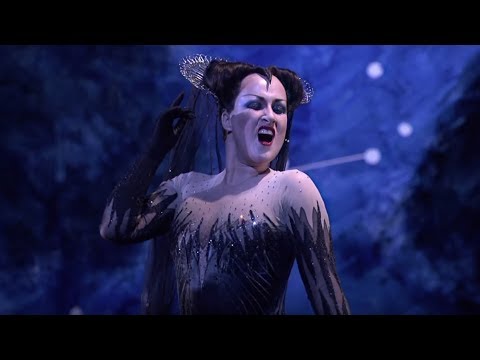
The Magic Flute – Queen of the Night aria (Mozart; Diana Damrau, The Royal Opera)
Read
Narration sentence highlighting is idle.
0:00-0:36 Command is established
The soprano enters at once, with orchestral chords answering and punctuating the declamation. The section sets the aria’s contract: short vocal commands, sharp instrumental replies, and a quick pulse that keeps the threat moving rather than letting it broaden into lament.
0:36-1:14 The line opens into coloratura
The first major turn comes when the voice shifts from declaimed force into rapid high-register figures. The accompaniment thins enough for the coloratura to become the formal event: repetition, leap, and return prove the vocal mechanism. A broader sustained line then gathers the section toward a strong cadence.
1:14-1:29 Orchestra resets the frame
After the vocal cadence, the orchestra takes over in a compact ritornello. This is not a new argument so much as a reload: the same urgent pulse and dramatic harmonic frame continue without the voice, preparing the return of the command style.
1:29-2:11 Declamation returns with higher pressure
The soprano re-enters over agitated accompaniment, restoring the opening’s call-and-answer force. The section repeats the aria’s basic bargain—vocal attack, orchestral punctuation, forward drive—but now the return feels less introductory and more prosecutorial, pushing toward another display passage.
2:11-2:34 Coloratura reprises and tightens
The high, fast writing returns as the aria’s decisive proof. The voice rides the steady orchestral pattern through repeated figures and controlled turns, making repetition itself the formal pressure. The span drives toward a break rather than a settled lyrical release.
2:34-3:01 Break, final cadence, public release
A brief internal silence withholds the next entry, then the orchestra resumes and closes the aria with decisive cadential action. The voice has finished making its case; the ending belongs to the instrumental punctuation and the hall response that follows. The whole form is a cycle of command, display, reset, repeated command, repeated display, and clipped closure.
Last updated Aug 26, 2026 · Written with GPT-5.5 · Galdr 0.7.0.dev0 · Inner Ear gemini-3.7-flash
Now playing
The Magic Flute – Queen of the Night aria (Mozart; Diana Damrau, The Royal Opera)
Mozart

galdr analysis
Click play to load galdr data.