Mozart
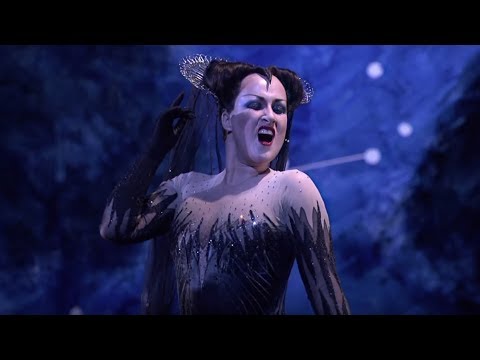
The Magic Flute – Queen of the Night aria (Mozart; Diana Damrau, The Royal Opera)
Read
Narration sentence highlighting is idle.
The orchestra strikes first—hard, spaced chords that open like doors slammed in a corridor—and the soprano is already inside them, voice bright and cutting, declaiming on the edge of the beat. Each phrase lands as accusation before the strings can settle; the woodwinds barely answer before she is off again. Nothing is preparatory. The ear has to catch the principal material in motion: a high, hard-edged line that treats the orchestra as punctuation rather than cushion.
Almost at once the floor drops. The full weight thins to a quiet pulse in the strings, and her voice lowers into a more speech-like mid-register, still urgent but now riding a hushed tread. The contrast is not rest; it is the same will speaking in a narrower room. Rising string figures begin to lift under her, and the line climbs again until the orchestra snaps back with sharp hits between her repeated emphases. A long, soaring tone gathers the section and hands it downward into the first real release.
What follows is the material the rest of the aria will force the listener to remember. Over a light, steady string pulse she leaps into detached high coloratura—staccato arpeggios that glitter and bite, clean high notes flung in rapid succession, then cascading triplet runs that ascend and fall with surgical evenness. The voice is no longer arguing; it is demonstrating command of altitude and speed. A brief lyrical turn softens the edge—a sustained mid-high tone, a more connected descent—before the staccato pattern returns, sharper, as if the first display had only been a draft.
The orchestra finally claims the space. After a powerful high note and a cadential arrival, the voice drops out and the full ensemble marches through a dense tutti ritornello, timpani and low orchestral weight driving the chords. Agitated string runs keep the air moving underneath. When she re-enters, the same fierce declamation is now answered by urgent ostinato and crisp chordal replies; call and response replaces the earlier one-sided assault. The memory of the opening is intact, but the orchestra has learned to answer rather than merely punctuate.
Coloratura returns over the lightest string support, cascading again through the high register, yet the surrounding form has changed. The listener now hears those runs against the tutti that just passed and against the quieter pulse that first introduced them; they are no longer pure display but the same will after it has been answered and thickened. A broader, sustained dramatic line then opens out as orchestral harmony swells beneath it—string and wind weight gathering until the voice and ensemble move as one toward the final stretch.
The closing is pure orchestral decision. Repeated cadential chords hammer down, full and final, with no vocal afterthought. Resonance hangs for a moment, then the hall takes over. What remains audible is the path the memory had to travel: the opening accusation, the thinned pulse that reframed it, the high staccato material that became the aria’s signature gesture, its recurrence after the tutti had altered the air around it, and the orchestra’s last word claiming the form’s destination.
Last updated Aug 26, 2026 · Written with Grok 4.5 · Galdr 0.7.0.dev0 · Inner Ear gemini-3.7-flash
Now playing
The Magic Flute – Queen of the Night aria (Mozart; Diana Damrau, The Royal Opera)
Mozart

galdr analysis
Click play to load galdr data.