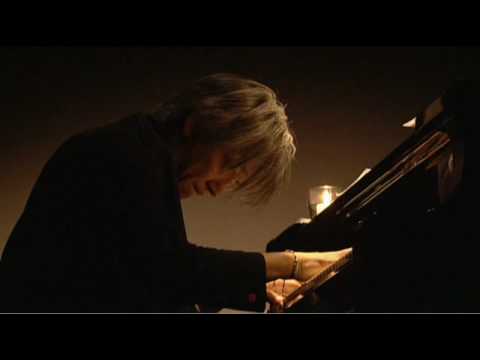
Ryuichi Sakamoto
Merry Christmas Mr. Lawrence
Read
Narration sentence highlighting is idle.
Establishes the theme
After a brief opening hush, solo piano states the main melody. The first phrases fix the song’s contract: a clear returning figure over a steady accompaniment pattern, already offering the pulse the rest of the form will keep.
Widens the orbit
The line climbs, ornaments, and shifts register. Secondary phrases and lower-chord turns open space around the theme without abandoning it; pressure swells and eases inside the same field rather than breaking form.
Restates with more weight
The primary melody returns with fuller voicing and richer phrasing. The section proves the theme can carry more harmonic depth while the pulse and shape remain intact—repetition as confirmation, not mere replay.
Holds the long middle
From roughly 2:14 the music settles into an extended runway. Phrase after phrase continues the same melodic contract; the form’s job is sustained commitment, letting the established pattern do the work without a new promise.
Breaks and empties
Near 3:47 the pattern loosens. A short internal silence and thinning figures release the hold; final lifts withdraw into terminal silence by 4:06.
The track is one melodic contract stated, deepened, held, then gently released.
Last updated Aug 14, 2026 · Written with Grok 4.5 · Galdr 0.7.0.dev0 · Inner Ear Gemini 3.5 Flash Lite
Now playing
Merry Christmas Mr. Lawrence
Ryuichi Sakamoto

galdr analysis
Click play to load galdr data.