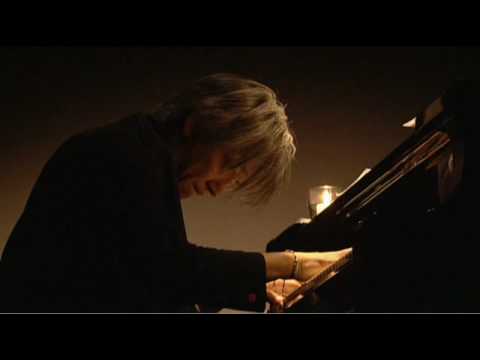
Ryuichi Sakamoto
Merry Christmas Mr. Lawrence
Read
Narration sentence highlighting is idle.
The first sound is nearly empty room, then piano alone. A clear melodic line steps forward without hurry, right hand carrying the theme while the left keeps a soft rolling undercurrent. Notes arrive with patience rather than push. Within the opening seconds the pattern settles into its ritual: the same contour returning, slightly altered each pass, never quite the same pressure on the keys. The pulse is moderate and available under the hands, yet the body is held more than seized—a suspended weight, attention locked by repetition instead of drive.
Phrases crest and decay in small arcs. The melody climbs into mid-register brightness, then resolves downward into quieter chords. Delicate ornamentation flickers and vanishes. Around half a minute the harmony drops a little lower; soon after, the primary motif reappears with a private flourish before the surface thins again. Still only piano. No second instrument arrives to thicken the field or break the intimacy. Dynamic swells rise and release without ever hardening into force.
Past the first minute the accompaniment opens wider—arpeggios weave beneath the line, chords expand in voicing—yet the surface stays sparse and harmonic. When the theme returns it feels both familiar and newly edged, as if the intervening phrases have taught it restraint. A lyrical upper register line traces above sustained pedals; rubato swells crest with quiet resonance, then decay into soft accompaniment and brief harmonic suspension. The music keeps offering the same melodic home while continually deforming its surface in micro-ways.
From roughly 2:14 the field locks more deeply. Pattern holds almost absolute; the long runway feels like embodied commitment rather than sameness. Register shifts, arpeggiated weaves, and gentle pedal points continue their quiet work while the motor stays settled and low-debt. Each return of the theme carries the residue of what came before—same contour, altered weight. Pressure builds and eases in small tides without rupturing the hold. This is the piece’s center of gravity: sustained surface balance, space around every note, a ritual that asks the listener only to stay.
Late, the pressure begins to ease. Phrases drop back; the line softens. Near 3:47 a brief hush opens—almost a blink of silence—then the piano lifts again with less mass, already preparing to leave. Weight gathers once more and loosens. By 3:57 the bodily hold recedes. What remains is true silence stretching to the close, the melody still sounding in the ear after the keys have stopped.
Last updated Aug 14, 2026 · Written with Grok 4.5 · Galdr 0.7.0.dev0 · Inner Ear Gemini 3.5 Flash Lite
Now playing
Merry Christmas Mr. Lawrence
Ryuichi Sakamoto

galdr analysis
Click play to load galdr data.