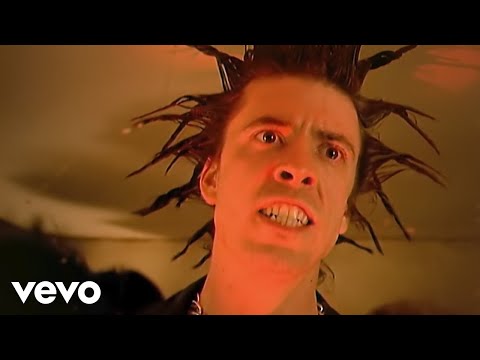
Foo Fighters
Everlong
Read
Narration sentence highlighting is idle.
One clean electric guitar starts it alone, strumming a steady pattern that carries the tempo before anything else joins. A second guitar threads a higher line over it around 0:10, and an acoustic texture blends in soon after, so the strum thickens without getting loud. The chords start climbing, and a low percussive thud settles beneath them at 0:31 — the pulse now something the body can actually find, moderate and even, with the strummed accents landing slightly around the thud rather than dead on it, a loping lean that stays in the feel for most of the record.
The voice at 0:37 is soft and close, breath and grain more than force, sitting forward over the strum and thud without crowding them. It rises once near the end of the section while the drums grow busier underneath, and by 1:19 the strumming has turned plainly driving — momentum stacking up against an arrival that still hasn't come. For nearly ninety seconds the track keeps its mass in check while everything about its motion leans forward.
At 1:30 the check is gone. The full band lands — distorted guitars, drums, and a vocal that has hardened from soft to pushed — an abrupt boundary with real contrast behind it, the clean strum swapped for riff weight in a single stroke. The tempo underneath hasn't moved; the mass sitting on it has. A high sustained note rides over crashing cymbals at 1:51, and from there the heavy stretch sorts into episodes: the vocal dropping into a flat rhythmic chant against heavy drums, crash accents nailing the corners of the riff, and — most striking — feedback and distortion left ringing in the gaps between vocal phrases, a new sustained texture the band lets stand instead of covering.
That willingness to let noise occupy space pays off at 3:05, when the distortion stacks into a wall, the densest and most forward surface of the whole recording. Immediately after, the bottom drops out into the starkest quiet contrast in the track: a whispered, emptied bridge, the voice pulled close over sparse/ringing guitars with much of the earlier weight suddenly gone. The hard vocal return follows that hollowed-out section around 3:26, making the re-entry feel like a fresh strike after the near-whisper. A long held note rides drum rolls near 3:37, the last soaring phrases follow, and then the level simply holds — the same mass turning over and over, one more lift just past 4:08 that re-states the altitude rather than raising it. What was a build has become a plateau, and the body stays seized in it, braced more than settled, because the accents never stop leaning across the grid that holds them.
Around 4:40–4:41 the band stops on a dime. No fade, no ritard — the whole edifice cuts out and leaves guitar feedback ringing in the emptied space, the only survivor of the wall that preceded it. That ring decays on its own through a short tail, thinning until it gives out altogether around 4:46, and the last seconds are silence. The ending is a switch thrown: everything deliberate about the buildup ends by subtraction, and the feedback is left to finish the sentence alone.
Last updated Aug 22, 2026 · Written with GLM 5.2 · Galdr 0.7.0.dev0 · Inner Ear Gemini 3.5 Flash Lite
Now playing
Everlong
Foo Fighters

galdr analysis
Click play to load galdr data.