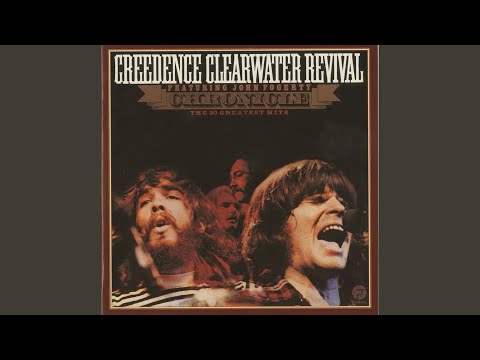
Creedence Clearwater Revival
Fortunate Son
Read
Narration sentence highlighting is idle.
The song is a class indictment wearing the clothes of a flag-waving march. Fogerty's speaker watches people born to wave the red, white, and blue, people who hear Hail to the Chief and point the cannon at someone else — the senator's son, the millionaire's son, the military son, every variation on inherited safety — and says, over and over, it ain't me. The refrain is a refusal, but it is also an identification: the speaker knows exactly which side of the line he stands on. He is the one without the silver spoon, the one whose house looks like a rummage sale when the taxman arrives, the one sent down to war by people who answer every question about sacrifice with more, more, more, more. The song names that machinery plainly and refuses to salute it.
What makes the recording more than a pamphlet is its body. The track never stops driving — a locked, motor-forward pulse that holds the listener in its grip for nearly every second of its two minutes. Fogerty's voice is rough and urgent, not pleading but declaring, and the band behind him keeps pushing like a formation that will not break stride. The music feels like the thing the lyrics describe: a momentum you did not choose, carrying you toward something you cannot stop. The song ends as it began, still moving, still refusing, the final chord ringing out and decaying into silence — the only moment the machine lets go.
Last updated Aug 15, 2026 · Written with GLM 5.2 · Galdr 0.7.0.dev0 · Inner Ear Gemini 3.5 Flash Lite
Now playing
Fortunate Son
Creedence Clearwater Revival

galdr analysis
Click play to load galdr data.