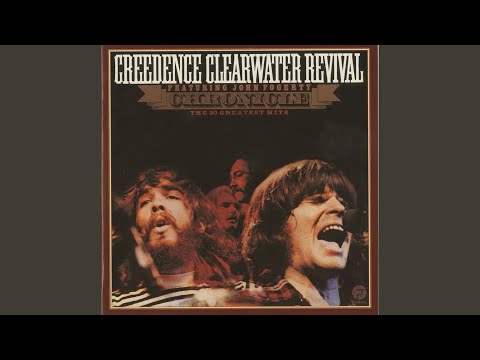
Creedence Clearwater Revival
Fortunate Son
Read
Narration sentence highlighting is idle.
The record gives almost no ceremony before it has the body. After the half-second of air, the guitar riff and drums are already moving, dry and squared-off, with the kind of rhythm that feels less like a swing than a command. It is quick, bright-edged, and stubbornly repeatable: not heavy in the dragged sense, but locked enough that the feet understand it before the argument arrives. The opening’s pleasure is part of its danger. The band makes protest out of a motor, a grid that keeps tightening because it never needs to show off.
Fogerty’s voice comes in rough against that settled runway, and the first verse turns patriot pageantry into machinery. The flag, the colors, the presidential band: the words name public spectacle while the music refuses spectacle’s grandeur. Under Hail to the Chief, the groove stays blunt and small-room, and that mismatch is the bite. Around 0:34, when It ain’t me arrives, the song does not open into a grand chorus so much as hammer the refusal into the same running track. The phrase is catchy because it is simple; it is moral because it keeps being simple.
The second verse does not change the engine, and that matters. Silver spoons, taxmen, rummage-sale evasions: the lyric keeps pointing upward, toward people protected by money and office, while the band stays down at street level, guitars and rhythm section grinding on a narrow road. The vocal delivery carries more scrape than melody needs, as if the line has to be forced through clenched teeth, but the rhythm underneath remains almost cheerful in its forward snap. That resistance—rage riding a hook you can shout with friends—is why the song has survived both as a radio staple and as an accusation.
After the second refrain, the vocal drops away and the guitar takes the space near 1:14 without loosening the track’s grip. It is not a separate dream or escape hatch; the solo rides the same beat, sharpening the surface while the drums keep the floor plain. The song’s middle understands that momentum is already the drama. There is no need for a grand detour when the central pattern has become the point: a country moving fast, repeating itself, making everybody inside it keep time.
The final verse returns changed because the target has narrowed. The earlier images of inherited privilege now become war itself: star-spangled eyes, someone else sent down, the answer always More, more, more, more. The music does not slow down to mourn that turn. It tightens the lyric by ignoring its horror, holding the same brisk rock-and-roll drive while the words expose the machinery feeding on bodies. The refrain piles up after 1:46, and each It ain’t me feels less like evasion than testimony from someone refusing to be mistaken for the protected class.
Near 2:09 the pressure starts to let go, but only after the band has spent the whole track refusing slack. The last repetitions fray into the ending, voice still throwing the denial forward, then the body lock releases and the final sound decays into silence. No long fade, no softened afterword: the song runs its charge straight to the edge and stops.
Last updated Aug 15, 2026 · Written with GPT-5.5 · Galdr 0.7.0.dev0 · Inner Ear Gemini 3.5 Flash Lite
Now playing
Fortunate Son
Creedence Clearwater Revival

galdr analysis
Click play to load galdr data.