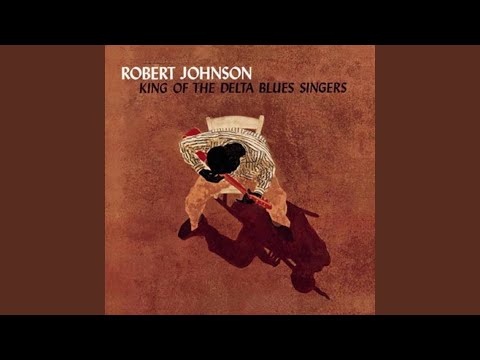
Robert Johnson
Cross Road Blues
Read
Narration sentence highlighting is idle.
A single acoustic guitar starts the whole thing in motion, close enough that the strum feels like wood and wire before it feels like arrangement. The beat is fast, but not heavy; the hand keeps throwing the pattern forward in short, bright strokes, with little slides and blues bends making the pitch surface wobble inside the grid. There is almost no cushion around it. The recording gives the body a narrow seat: enough pulse to catch, not enough bass or drum weight to sink into.
The voice arrives just after the first few seconds, around 0:09, and it does not thicken the track so much as sharpen its front edge. It sits above the guitar with a pinched, projecting grain, then pulls away and lets the instrument answer. That call-and-answer shape becomes the engine: vocal bursts entering as pressure, guitar figures slipping into the opened space, the strumming never giving up its quick little motor. The pattern is steady, but the accents are not square. Attacks lean around the beat, especially when the guitar flicks into ornament, so the body keeps settling and correcting at the same time.
By the first half-minute, the track has found its main physical bargain. Nothing large enters; there is no band arrival, no sudden low-end floor. Instead, small changes in touch carry the drama. A harder vocal attack presses the upper mids forward, then a lifted guitar figure flashes brighter and lighter. The weight comes in short swells under the moving pulse, then lifts again before it can become drag. The surface stays thin, but it is busy in the hands: strum, slide, pluck, scrape, a quick turn of pitch color, then back into the churning pattern.
Around 1:00, the vocal re-entry has more bite against the same spare setup, and the guitar underneath feels even more like a fast wheel than a backdrop. The sound keeps its warmth because so much of it is sustained string resonance, but the top of the instrument keeps scratching light into the room. When the voice breaks off, the guitar does not relax into emptiness; it answers with figures that feel sprung, almost impatient, as if the groove is being held together by wrist tension and returning thumb pressure.
The longest middle stretch keeps tightening without adding mass. From about 1:17 onward, the voice appears in quick, overlapping-feeling phrases, then longer pushes, and each entrance changes the pressure mostly by proximity and grain. The guitar’s low notes give just enough body to keep the motion grounded, but the real grip is in the repeating attack. This is a captured pulse rather than a comfortable stomp: the track takes the body by speed and insistence, not by volume.
Near 2:05, another bright guitar flash cuts through before the final vocal fragments and last instrumental answers. The release begins before the ending fully arrives; the pressure starts to loosen around 2:22, and then the pattern breaks apart rather than resolving into a grand finish. At 2:26 the motor finally lets go. What remains is the guitar’s last resonance thinning into room noise, the track ending by losing its grip on the body instead of by making one last heavy mark.
Last updated Aug 20, 2026 · Written with GPT-5.5 · Galdr 0.7.0 · Inner Ear Gemini 3.5 Flash Lite
Now playing
Cross Road Blues
Robert Johnson

galdr analysis
Click play to load galdr data.