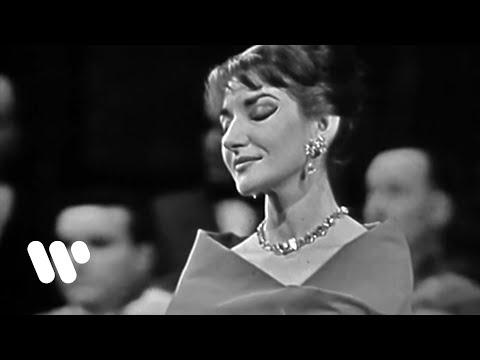
Maria Callas
Casta Diva
Read
Narration sentence highlighting is idle.
Soft flute opens alone against a thin bed of strings, the line high and unforced, almost floating on the room rather than cutting through it. The strings do not press; they hold a warm, sustained floor that sways more than it pulses. A few phrases later the violins take the melodic thread and the woodwinds answer in a gentle descent, the surface still open, density still thin. Nothing seizes the body. The pulse is present only as a slow, suspended sway—felt more as breath than as grid.
The flute returns to the foreground, tracing a high lyrical contour while the strings stay subdued beneath it. Pressure builds and eases in small waves without ever thickening into weight. For nearly a minute and a half the field remains this way: harmonic warmth, sparse surface, motion that circles rather than advances. The ear settles into the suspended texture the way one settles into still air.
Around a minute and a half a solo soprano enters on a long legato line, soft at first, grain clean, placed close enough to feel intimate against the quiet orchestra. The voice does not break the field; it becomes another sustained thread inside it. Phrases rise into a brighter register, hold, then descend into warmer middle tones. Each crest gathers a little more presence without hardening the edge. Strings swell and recede under the line, pressure arriving and releasing in slow exhales. The body stays lightly engaged—captured by the phrasing more than by any motor grid.
Midway the surface thickens. A chorus enters softly behind the soloist, blending into the sustained orchestral chords rather than striking against them. The soprano lifts above that blend on soaring phrases; later the ensemble crests into a fuller wall of sound, voices and orchestra fused, presence forward, the room suddenly denser. Then the mass eases again into a warm harmonic bed. The pattern never fractures—only the force behind it rises and falls.
After the first large crest the orchestra alone carries a flowing transitional melody, strings with warm vibrato, density medium, still suspended. Chorus returns softly, then the whole ensemble builds again in volume and fervor, another thick crest that leans hard into the room before beginning a long downward resolution. Voices fade. What remains is gentle orchestral sustain, the final chord held in open space, thinning until only resonance and silence are left.
Last updated Aug 20, 2026 · Written with Grok 4.5 · Galdr 0.7.0 · Inner Ear Gemini 3.5 Flash Lite
Now playing
Casta Diva
Maria Callas

galdr analysis
Click play to load galdr data.