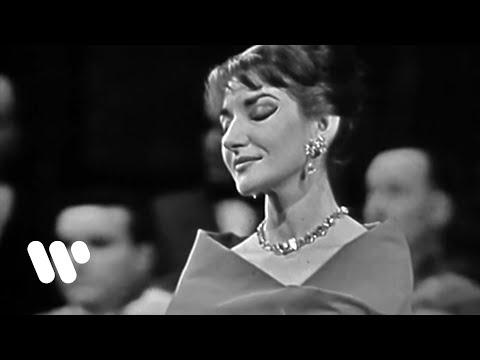
Maria Callas
Casta Diva
Read
Narration sentence highlighting is idle.
The flute begins it — a soft, expressive melody over quiet strings, each limb of the tune rising, holding, and settling back. Within seconds the violins take the same breath and widen it, and the motion underneath settles into a gentle, even ripple that will run beneath everything that follows. The introduction already breathes the way the singing will breathe: arch up, sustain, ease down. When a voice finally enters, the melody is already familiar, as though the instruments had been rehearsing it on her behalf.
Maria Callas comes in at 1:31 with almost no ceremony — soft, on that same long arch, the flute's line simply taken over by a human voice. She invokes the Chaste goddess bathing the ancient trees in silver, and the delivery is all span and control: the phrase climbs to a high note she holds while the strings stay well beneath her, then she lets it fall into a warm middle register. A short orchestral figure sighs in the pause between her spans, and she returns broader than before. The plea for the goddess to show an unveiled face is itself delivered unveiled — one unbroken line after another, nothing forced, everything allowed to complete itself.
The second time she asks for that face to be turned toward her, the same words sit higher and come out fuller, an ascent with real intensity where the first statement was serene. Then she releases it: the line descends, a delicate run tumbles it down, and the orchestra takes a warm interlude of its own. Her re-entry afterward is softer than her very first phrase — pure legato woven over quiet strings — before the span grows upward again and settles. Returns here are never neutral; the same shape arrives each time at a different pressure, and the piece asks you to remember the first version precisely so the later ones can weigh more or less against it.
Near 3:56 the texture changes without announcement: other voices appear behind her, soft and sustained, blended into the orchestral chords until the prayer stops being solitary. Her line rises clear above the chorus as she turns to the second petition — Temper thou — and the character shifts. The phrases come shorter; surges and releases that once spanned a whole stanza now alternate within a few bars. Around 4:36 the ensemble crests beneath the massed voices, the fullest sound the recording has offered, and then recedes as she continues over the warm harmony. Adoration has become petition, and the change is audible as compression: the same breathing, in smaller and more urgent units.
The plea then widens to its largest image — peace spread over the earth in the same measure it reigns in heaven — and the ensemble stretches to match it. Fervor builds steadily from about the six-minute mark; her line begins to fragment on the same three words turned over and over, until the final phrase opens the long downward resolution and the chorus folds away, the harmony settling beneath her as the words land.
What remains afterward is not a climax but a held chord. Once the voices are done, the orchestra gathers weight one last time — a swell arriving around 6:41 — and then simply sustains, the final sonority resonating in the room and decaying until silence closes the recording. It is a quiet return of the opening state: a single, unhurried sound, the accompaniment that rippled beneath everything now holding the last word in stillness, the melody's long habit of lifting and easing resolved at last into one unbroken glow.
Last updated Aug 19, 2026 · Written with GLM 5.2 · Galdr 0.7.0.dev0 · Inner Ear Gemini 3.5 Flash Lite
Now playing
Casta Diva
Maria Callas

galdr analysis
Click play to load galdr data.