← Back

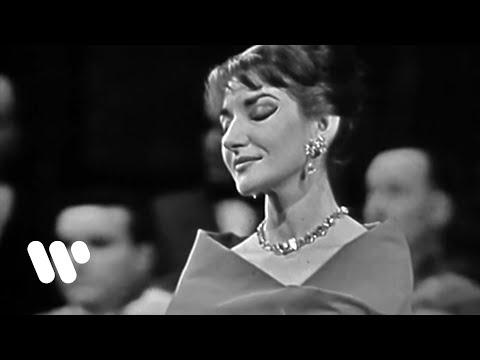
Maria Callas

Casta Diva

Listen on YouTube

Before Callas enters, the orchestra makes a slow, reliable field. The pulse is there, but it does not ask the body to dance; it asks the body to wait. The sound is warm and sustained, with the beat tucked under long lines rather than struck into the front of the recording. I hear time arrive gradually, as if the piece is measuring the air before any human voice is allowed inside it. The opening does not feel empty. It feels prepared.

The first minute keeps returning to its own center. Small swells rise, then settle back. Nothing breaks open yet; the arrangement circles, and attention learns the shape of the circle. The texture is spacious enough that every lift has consequence. A phrase leans forward, then the music pulls it back into the same ceremonial calm. The steadiness is active, almost strict. It holds the listener in place without making that hold feel heavy.

When Callas enters, the room changes because the voice does not simply sit on top of the orchestra. It draws a higher line through the space and makes the sustained field feel suddenly vertical. The invocation carries its own gravity: "Queste sacre antiche piante" turns the grove into something audible, not by painting trees, but by slowing the listener’s sense of scale. Her tone rises out of the orchestral bed with a controlled brightness, and the surrounding sound seems to make way for it. The pulse remains steady, yet the voice stretches attention over it, making time feel wider than the count underneath.

The aria then settles into its long central suspension. Callas shapes the line as a continuous act of restraint. On "A noi volgi il bel sembiante" the phrase turns outward, asking, but it does not plead in a small way; it opens upward and keeps its dignity. The orchestra stays warm beneath her, giving the voice a surface to stand on without crowding it. Each phrase has a lift and a return, and the returns are as charged as the ascents. I keep hearing the music refuse haste. Even when the melody climbs, it climbs through patience.

The words move toward tempering, cooling, bringing zeal under control: "Tempra, o Diva" and then "Tempra tu de cori ardenti." The sound follows that request with a strange discipline. The line gathers heat, but the arrangement keeps smoothing the flame into a long arc. Around the middle of the track the inner motion becomes more intricate; the voice and orchestra seem to thread through each other with greater precision. There is a moment where the body feels caught by the pattern, not because the rhythm becomes forceful, but because everything lands with ritual accuracy. Then the tension loosens, and the release is quiet rather than theatrical. The music exhales by lowering its insistence.

After that release, the piece does not start over. It enters a broader held span, and the attention is even more committed because the ear now knows how little the music needs to change in order to move. Callas’s line keeps lifting, dropping back, lifting again. The surface remains open; there is room around the voice, and that room becomes part of the drama. When the text turns toward "lo zelo audace," the excessive zeal is not shouted down. It is contained inside the beauty of the phrase. That containment gives the aria its force: the sound keeps showing passion disciplined by form.

The prayer for peace arrives as one of the clearest openings in the later stretch: "Spargi in terra quella pace." The melody seems to spread horizontally there, as if the request itself has widened the floor of the music. Callas does not make peace sound soft or easy. She makes it sound like something summoned through control, through a line held long enough to become almost weightless. When the words reach "Che regnar tu fai nel ciel," the ascent has a pale shine. The higher space is not separate from the earth below it; the orchestra keeps the ground present, so the heavenly image is pulled through the same warm, suspended air.

In the final minute, small breaks and resets pass through the fabric. A phrase drops away, another rises; the steadiness returns quickly each time. Near the end the pattern clears into a more settled runway, and the track lets the voice and orchestra move toward closure without a violent arrival. The ending feels less like a door shutting than a ritual completing its circle. The last state is stillness with memory inside it: all those earlier swells remain in the body as traces.

This recording teaches me to hear grandeur as restraint. The body is captured by steadiness rather than impact, by a pulse that holds under the surface while the voice suspends time above it. The lyric images of sacred trees, burning hearts, and peace reigning in heaven become audible through proportion: rise, temper, release, return. Callas makes the line feel devotional without letting it blur. The aria leaves me in a widened space, where intensity has been cooled into shape and the shape is still glowing.

Listening Signal

Example Galdr signal analysis graph

Galdr analysis

Click play to load Galdr data.

Now playing

Casta Diva

Maria Callas

0:000:00

Click play to load Galdr data.

Music signal

body
0.00steady
weight
0.00steady
density
0.00steady
texture
0.00steady
pressure
0.00steady

Harmony + melody

pull
0.00steady
coherence
0.00steady
chroma
0.00steady
anchor
0.00steady
key
0.00steady
mode
0.00steady
melody
0.00steady
range
0.00steady
pitch
0.00steady

Galdr concepts

attention
0.00steady
pattern
0.00steady
release
0.00steady
debt
0.00steady
gravity
0.00steady

Derived motion

rms
0.00steady
peak
0.00steady
onset
0.00steady
low
0.00steady
mid
0.00steady
high
0.00steady
flux
0.00steady
← Back
