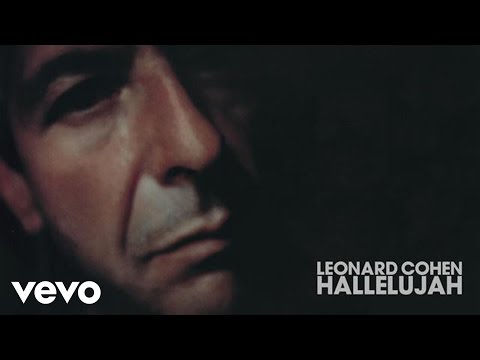
Leonard Cohen
Hallelujah
Read
Narration sentence highlighting is idle.
The song leaves standing a praise that does not require unbroken faith. A speaker walks biblical wreckage—David’s secret chord and baffled kingship, Bathsheba on the roof, a throne broken and hair cut—and keeps arriving at the same word. Desire overthrows proof; love draws the Hallelujah from the mouth as much as worship does. The argument is not that suffering is holy, but that the holy and the ruined versions both count: a blaze of light in every word, the holy or the broken Hallelujah.
Cohen’s low, unhurried voice treats the claim like testimony rather than sermon. Verses stay close and spare; the repeated title-word gathers choir and band, then thins again, so the refrain feels earned rather than triumphant. By the end he has done his best, told the truth, failed enough to stand before the lord of song with nothing left on the tongue but that single offering. What remains is not victory and not despair—only the stubborn usefulness of a broken praise.
Last updated Aug 17, 2026 · Written with Grok 4.5 · Galdr 0.7.0.dev0 · Inner Ear Gemini 3.5 Flash Lite
Now playing
Hallelujah
Leonard Cohen

galdr analysis
Click play to load galdr data.