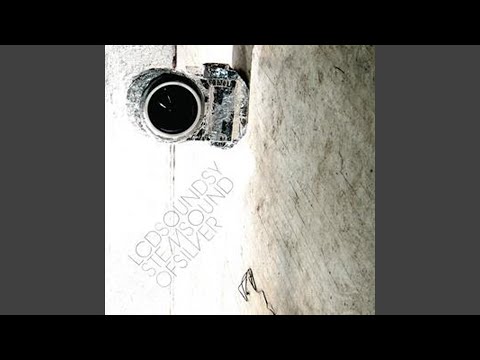
LCD Soundsystem
All My Friends
Read
Next narration 0:00
Narration sentence highlighting is idle.
One piano part starts the whole thing — a tight, bright figure, struck over and over.
The drums settle in, then the low pulsing notes come in underneath, and it locks almost immediately — a fast, metronomic drive under that piano.
There's the voice: 'That's how it starts.' It sounds almost offhand, but it's landing in a groove that's been completely serious for over a minute.
The night gets planned in plain details — 'because we know we're gonna be up late' — and the delivery stays level, like he's reading a list he knows by heart.
'That's how it starts' — and the verse ends on the very line it opened with. This song runs everything in circles.
It starts again — he even changes the words to 'and so it starts.' Same circle, one more lap.
'You switch the engine on.' He finally named the thing that's been carrying us. And then a whole Pink Floyd title — 'we set controls for the heart of the sun' — which is, he says, 'one of the ways that we show our age.'
The repetition's inside the words now — 'if the sun comes up, if the sun comes up, if the sun comes up.' He can't say it once, and the piano can't either.
Here it widens from party details into time: 'you spent the first five years trying to get with the plan, and the next five years trying to be with your friends again.' Five years, then five more — and the beat doesn't loosen one bit. That steadiness is what makes the counting sting.
'I know it gets tired, but it's better when we pretend.' The fatigue is right there in the sentence, and the tempo won't acknowledge it at all.
He sings 'it comes apart — the way it does in bad films' — and nothing comes apart. No breakdown, no rescue; the piano keeps striking, the pulse holds its line. The refusal is the drama.
'Except the part when the moral kicks in.' The song borrows the movie language and then skips the lesson — no moral arrives, just the same pattern, bar after bar.
'I wouldn't trade one stupid decision for another five years of life.' The whole bargain said plainly, and the groove carries it forward without slowing down for it.
And the arithmetic doubles — 'you drop the first ten years just as fast as you can' — more words packed tighter, against a beat that won't hurry for anybody.
There it is: 'where are your friends tonight?' It lands in the middle of the same running pattern, like the question everything's been circling.
And the voice steps back out. Half a minute of just the groove — the same bright figure from the first second, going like nothing was ever asked.
'To tell the truth — oh, this could be the last time.' Same wry voice, but it lands heavier than anything in the first half.
'So here we go — like a sales force into the night.' Going out with your friends rendered as a business trip, and somehow it's still affectionate.
'I could still come home to this.' After all the fool-on-the-road stuff, this is the first thing offered as shelter — the song pointing at itself as a place you can still get back to.
The lines crowd up now — dad face, sleep on the plane, kids looking impossibly tan. A whole self-audit crammed at the same tempo, and he's sprinting to keep pace with the band.
And then, flat as ever: 'Hey, I'm finally dead.' The bleakest line of the song told like a running gag, over a beat that doesn't blink.
'Where are your friends tonight?' — it's back, right on the heels of 'we knew you were tired.'
A third time, and the music gives him nothing new — same piano pattern, same pace, no swell, no answer. The asking just keeps happening on top of the run.
'If I could see all my friends tonight.' After all the counting and the jokes and the asking, the wish is just that, said plainly, riding the same beat.
He said that wish four times over, and then everything lets go — by 7:33 the track has thinned away to silence, and the question never did get an answer.
Last updated Aug 23, 2026 · Written with GLM 5.2 · Galdr 0.7.0.dev0 · Inner Ear Gemini 3.5 Flash Lite
Now playing
All My Friends
LCD Soundsystem

galdr analysis
Click play to load galdr data.