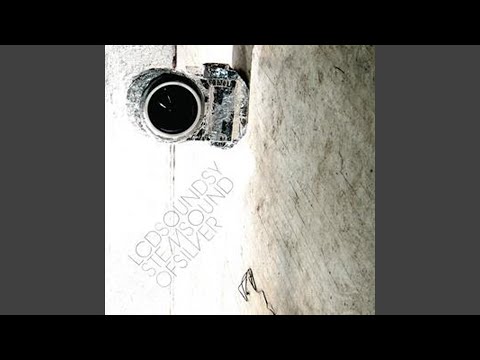
LCD Soundsystem
All My Friends
Read
Narration sentence highlighting is idle.
A bare second of room, and then piano — not pedal-and-arpeggio piano but chords struck down on a quick grid, the instrument working as its own rhythm section from the first bar. The surface is warm and chord-led, light on its feet, and the count takes the body almost immediately; there's no ramp into the tempo, it's simply running. Eight seconds in, a higher figure starts circling above the chords, one keyboard split into two jobs: motor below, restless tune on top. For half a minute that's the whole world of the track.
Everything else arrives one limb at a time. A tambourine ticks in around 0:25, drums at about 0:34 — straight, driving, firming a floor under the piano's cycle — and a few seconds later round bass notes begin pulsing underneath, locking the bottom to the same quick count. Then the synthetic layer: counter-lines weaving in just past the minute mark, high tones shimmering above, and near 1:33 a filter sweep tilts the spectrum open so the top end starts to glow. No single element slams home; each slides into a pocket that was already running.
The voice enters around 1:21, and its softness shapes everything it touches. Spoken-sung, close, it rides the top of the groove without pressing down on it — and even when it pushes, pitch climbing and syllables compressing into rapid runs, the level stays low. Urgency lives entirely in pace and contour, never in volume. Its attacks lean slightly around the beat instead of landing dead-center, a small human drift on a very metronomic frame, and the phrases come in clusters with air between them, spaced like breaths.
From the middle onward the change is thickness rather than event. Around 4:30 the percussion densifies, and within a quarter minute the texture is a genuine wall, the voice threading through it now instead of over it, the tone still warm even at its most loaded. Near the five-minute mark the voice steps out for roughly half a minute and the machines churn on unaccompanied — piano cycle still turning, drums still driving — before it returns and climbs again over brighter synth color underneath.
What seven-plus minutes refuse to do is let go. There is no breakdown, no full stop, no reset anywhere: one continuous forward lean from the first struck chord to the last sung phrase, the thread never dropping even when the voice does. And from about 6:31 the voice stops leaving at all — phrase after phrase, back to back, nearly a minute of unbroken singing riding straight into the close while the surface behind it stays at its thickest.
The ending is a release, not a rupture. Pressure starts draining while the final phrases are still in flight, the music drops back a step around 7:28, and at 7:33 a beat of near-silence opens — just long enough for the reverb of everything to bloom up once, a last exhale of the room. After that the weight simply lifts. By 7:36 it is true silence, and the file runs empty for five seconds more: the body that was held the whole way through isn't thrown at the end, it's set down.
Last updated Aug 23, 2026 · Written with GLM 5.2 · Galdr 0.7.0.dev0 · Inner Ear Gemini 3.5 Flash Lite
Now playing
All My Friends
LCD Soundsystem

galdr analysis
Click play to load galdr data.