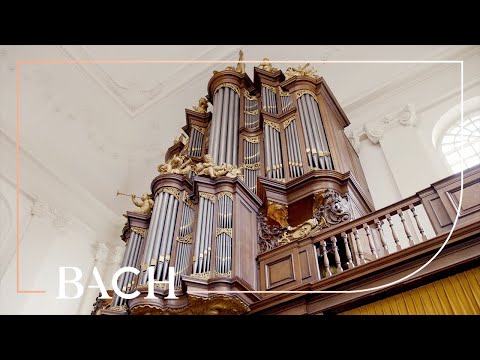
Bach
Passacaglia and Fugue in C minor, BWV 582
Read
Next narration 0:08
Narration sentence highlighting is idle.
A low organ line steps out of the silence. No introduction, no gesture. Just the bass.
The pattern is set. The passacaglia ground is plain to hear now, that bass line returning.
The bass pattern is familiar by now. Upper voices have started moving above it, brightening, tightening, while the ground keeps returning.
The pulse is steady, but it doesn't feel like dance. The organ sustains everything in held tone, so the motion comes as much from the held sound as from the attack.
Something has darkened. The center of the sound is warm and heavy now, even when the higher voices sharpen the edge.
The ground keeps coming back. Each return adds something. A brighter line, a thicker chord. And the ear starts catching what's different.
More crowded now, but not unstable. The surface is busier while the pattern holds.
The ground doesn't feel like a demonstration anymore. It feels like a condition. Lines cross, thicken, answer each other, but that returning path is still right there.
The passacaglia ground is loosening into the fugue. The bass is still there, but the focus moves to entries that chase and answer each other.
The counterpoint is pressing closer. The organ's sustained body makes the lines feel architectural. Not a diagram, but something load-bearing, heard in real time.
The lower register is thickening. The whole instrument seems to widen. And when the higher voices answer, the top of the sound hardens.
The movement is spending what it's been storing. The pulse is still there, but the weight is pushing toward closure.
The pattern breaks.
The organ lets go into the last decay. The silence carries the outline of the ground after the sound has stopped.
Last updated Aug 10, 2026 · Written with GLM 5.2
Now playing
Passacaglia and Fugue in C minor, BWV 582
Bach

galdr analysis
Click play to load galdr data.