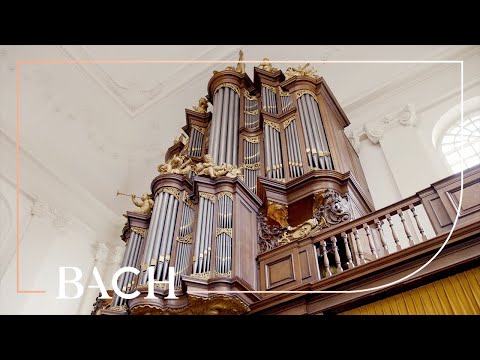
Bach
Passacaglia and Fugue in C minor, BWV 582
Read
Narration sentence highlighting is idle.
The organ begins with almost nothing: one low voice, stating a theme alone. A measured descent through C minor, a firm beginning, a close that lands rather than resolves — and then the line simply starts again, with a second voice appearing above it by 0:18. That is the bargain of the next thirteen minutes. A passacaglia is a promise: this bass will keep returning, and everything that happens — every change of stop, every figure the hands play, the fugue itself — will be measured against how it answers that return. The theme is short enough to memorize on two hearings, and nothing later makes sense unless you carry it.
The early variations thicken by addition. Counterpoint threads into the middle register inside the first half minute; the stops brighten; by 2:22 running sixteenth notes are spilling across the steady descent while the pedal foundation deepens below. The surface is what changes — the ground keeps its pace underneath, arriving on schedule no matter how busy the hands become. Some variations leave the theme in plain hearing; others bury it in figuration until the ear relocates it by the harmonic pull beneath the motion. That small act of finding it again, cycle after cycle, is most of the listening.
A quieter, more measured variation near the three-minute mark lets the phrasing breathe before deeper stops and a first real swell carry the music upward — and the swell crests precisely where the work recedes. At 4:45 the first true withdrawal begins: the phrasing draws back, and the heavier sonority gives way to a lighter, clearer combination of stops. Then the climb resumes, full organ with commanding bass around 5:54, only to thin again into transparency half a minute later. This alternation is the passacaglia's breathing. Each crest so far has stood taller than the last, and each recession makes the next arrival feel earned rather than merely loud.
Syncopation tightens the polyphony in the seventh minute; long legato lines answer it by singing instead of pushing. More voices gather, the harmony turns sustained, and just past 8:00 the accumulated crest breaks into a bright, agile cascade of counterpoint — weight released as speed. The final approach turns chordal and grand, and by 9:09 the full instrument is stating the variation in block chords over deep pedal, the ground sounding in every register at once. It has the sound of a conclusion.
It is not the conclusion. At 9:44 the fugue subject enters, and any ear still carrying the opening line catches the resemblance immediately: the subject is that theme's first phrase picked up into faster motion, the old descent recast from floor into melody. Within seconds it is being handed from voice to voice in imitation, and as the entries accumulate the line that could only repeat now travels, competes, stacks against itself in free counterpoint. The ostinato's insistence becomes argument. Everything the passacaglia asked to be remembered arrives here as raw material.
Late in the fugue, the memory of the passacaglia presses back into the racing texture: the music sounds as if the repeated ground and the line it generated are being brought into the same argument. From there the ending lets go in stages. The grip of the ground loosens around 12:27; the accumulated pressure releases; and the close is not a wash but separated strokes — big detached chords, each one its own event, the cadence of that first low line pulled apart into single blows. The last of them decays into the room, and by the final seconds only the building is still ringing.
Last updated Aug 16, 2026 · Written with GLM 5.2 · Galdr 0.7.0.dev0 · Inner Ear Gemini 3.5 Flash Lite
Now playing
Passacaglia and Fugue in C minor, BWV 582
Bach

galdr analysis
Click play to load galdr data.