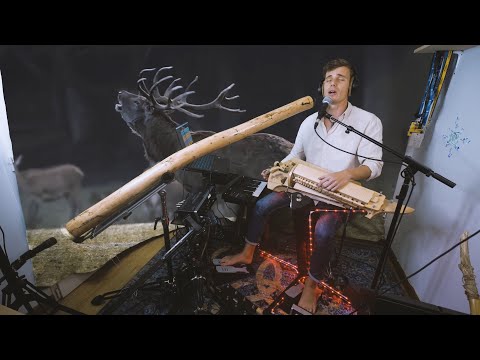
Eolya
Honneur
Read
Narration sentence highlighting is idle.
0:00-0:09 Establishes the frame
A low sustained opening sets the track’s tonal floor before the voice arrives. The pulse is already implied, but the form begins by holding space rather than declaring a beat-led section.
0:09-0:52 Introduces and proves the chant
The male chant enters over the drone and becomes the first clear foreground. This span narrows the piece around a single vocal line, with small phrase lifts and drops marking continuation rather than new sections.
0:52-1:07 Clears the voice and reloads the motion
The chant recedes, leaving the support to carry the transition. Around the one-minute region, percussion and broader backing gather in, shifting the track from vocal invocation into motor form.
1:07-2:30 Holds the main instrumental contract
The central drive settles into its long working span. Repetition is the point here: the rhythm keeps the body captured while the arrangement sustains pressure without needing a new vocal statement or sharp break.
2:30-3:34 Returns through the same machinery
A returning phase around 2:30 briefly reorients the pattern, then the instrumental hold resumes. The section does not open a contrasting bridge so much as reload the established contract and proves that the track’s force comes from persistence.
3:34-3:57 Loosens into the ending
The final pocket keeps the pulse active for a last pass, then pressure releases and the pattern begins to lose its grip near 3:53. The close withholds a large resolution; the form empties by loosening rather than by landing.
Last updated Aug 15, 2026 · Written with GPT-5.5 · Galdr 0.7.0.dev0 · Inner Ear Gemini 3.5 Flash Lite
Now playing
Honneur
Eolya

galdr analysis
Click play to load galdr data.