← Back

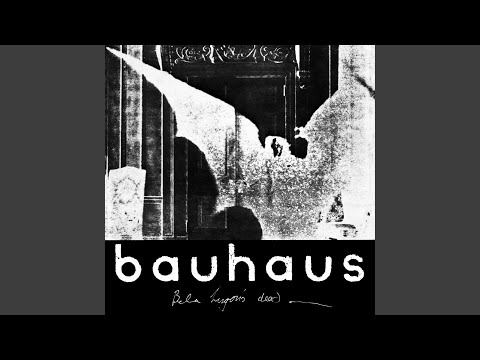
Bauhaus

Bela Lugosi's Dead

0:00-1:36 Set Before Song

The track spends its first stretch building the set. The rhythm enters dry and patient, the bass keeps a narrow path under it, and the surrounding space stays colder than a normal rock intro. The form is already doing the important work: it teaches the listener to accept a corridor before the voice explains what kind of corridor it is.

1:36-2:42 Corridor Settled

Around 1:36, the groove has stopped feeling like preparation and started feeling like the main architecture. Small lifts and scrapes pass through the pattern, but the structure does not offer a verse yet. That delay matters. By holding the vocal back, the song makes the eventual lyric entrance feel like an object arriving in a space that has already been measured for it.

2:42-3:38 First Tableau

The first timed lyric images arrive near 2:42, and the title phrase follows around 2:54. Structurally, this is not a conventional first verse so much as a tableau: pale fabric, rack, tower, victims, box, title. The song has already established the walk, so the words enter as props under hard light rather than as narrative exposition.

3:38-4:45 Procession And Refrain

At 3:38, the image-field turns processional: brides, tomb, dead flowers, darkened room, count. The repeated undead calls from 4:04 through 4:45 turn the section from description into circulation. The structure is using repetition as pressure. It keeps sending the same condition through the same corridor until the line feels less like a hook than a state.

4:45-6:43 Long Held Middle

The middle stretch refuses a new formal rescue. Instead of bridge, solo, or chorus lift, the track keeps the pattern alive and lets duration do the deepening. That choice is the spine of the song. It makes the listener inhabit the groove long enough for stasis to feel active, which is why the track can stay long without becoming merely extended.

6:43-8:11 Late Address

The late vocal address begins around 6:43 and narrows the room toward Bela himself. The repeated call-and-answer pattern through 7:28 does not create a fresh plot; it reanimates the figure inside the existing structure. When the last timed undead call lands around 8:11, the song has turned the name into a fixture rather than a revelation.

8:11-9:32 Exit Without Rescue

After 8:11, the form starts exposing more open space. Pattern breaks around 8:45 and 9:22 loosen the corridor, but there is still no triumphant close. The terminal silence after 9:32 is the structural answer. The song exits by removing the architecture it spent nine minutes enforcing.

Example galdr signal analysis graph

galdr analysis

Click play to load galdr data.

Now playing

Bela Lugosi's Dead

Bauhaus

0:000:00

Click play to load galdr data.

Music signal

body
0.00steady
weight
0.00steady
density
0.00steady
surface
0.00steady
pressure
0.00steady

Surface evidence

balance
0.00steady
rough
0.00steady
noise
0.00steady
attack
0.00steady
sustain
0.00steady
band
0.00steady
motion
0.00steady
punch
0.00steady
bass
0.00steady
body band
0.00steady
presence
0.00steady
air
0.00steady
bright
0.00steady
perc
0.00steady

Harmony + melody

pull
0.00steady
coherence
0.00steady
chroma
0.00steady
anchor
0.00steady
key
0.00steady
mode
0.00steady
melody
0.00steady
range
0.00steady
pitch
0.00steady

galdr concepts

attention
0.00steady
pattern
0.00steady
release
0.00steady
debt
0.00steady
gravity
0.00steady

Derived motion

rms
0.00steady
peak
0.00steady
onset
0.00steady
low
0.00steady
mid
0.00steady
high
0.00steady
flux
0.00steady
← Back