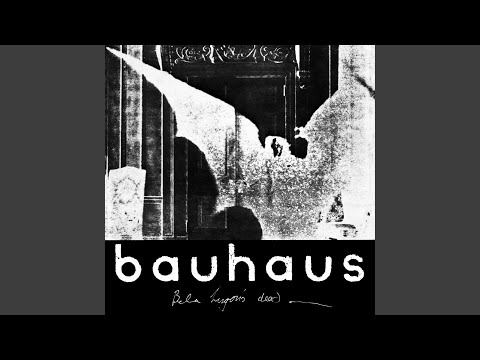
Bauhaus
Bela Lugosi's Dead
Read
Narration sentence highlighting is idle.
The first sound is a single percussive hit alone in a very large room, and the second takes its time arriving. A breath of near-nothing opens the recording, then spaced-out drum taps begin, each one ringing out until the next replaces it. Almost at once the body finds the count — within seconds the grid is simply there, offered by hits so sparse they're more architecture than groove. For a while this is nearly the whole track: percussion and reverb, the hits grouping into small lifts and falls, a faint scratching texture creeping into the background while a wind-like electronic swell drifts through around the one-minute mark.
The additions come one at a time, each thin enough not to crowd the room. A sustained hum settles under the pulsing drums; a guitar note bends softly across the beat; the bass and pocket settle around 1:36, a minimal line that walks rather than pushes. As that low voice settles in, the rhythm section locks, and from there the pocket holds in one long unbroken stretch, keyboard pads swelling somewhere beneath.
What that pocket feels like from inside is the recording's real signature. Attacks lean around the beat instead of landing square on it — a constant slight sway, like weight shifting foot to foot. Low-end pressure gathers and lifts in slow waves without ever fully releasing, so the body stays seized without quite relaxing into its seat, and small bright flecks — a guitar figure, an electronic glint — flash inside the phrases, quick sparks against a mix that tilts warm and dark. For all the drumming, the dominant mass is sustained tone.
A voice arrives at 2:42: low baritone, soft, half-spoken, sitting in the band's middle distance rather than in front of it — same grain as the pads, another layer among layers. It works in clusters, a few phrases and then rest, each line ending cleanly, the gaps filled by the same walking bass and leaning drums. Through the third and fourth minutes the voice keeps returning in these short bursts, and after it withdraws the instrumental run simply continues, drifting guitar tones taking the top space.
When the voice comes back at 6:43 it stays longer and sits a touch more forward, phrase after phrase of the same low grain. Its last stretch, beginning around 7:27, runs almost twenty seconds unbroken — the longest sustained act anywhere here, and it belongs to the voice, not the instruments. Beneath it the guitars have begun to feed back, delay swirls opening the top of the mix while the bassline keeps its relentless walk.
The dissolve starts around 8:45, and it's the opening played in reverse. Guitars thin into trailing echoes, the drums recede to distant taps, and before long only percussion remains, ringing in the wide room exactly as it did at the start, only sparser. A final break tips it over, the pressure lets go, the motor hold loosens — and by 9:32 the room itself is silent, the reverb the last thing to fade.
Last updated Aug 21, 2026 · Written with GLM 5.2 · Galdr 0.7.0.dev0 · Inner Ear Gemini 3.5 Flash Lite
Now playing
Bela Lugosi's Dead
Bauhaus

galdr analysis
Click play to load galdr data.