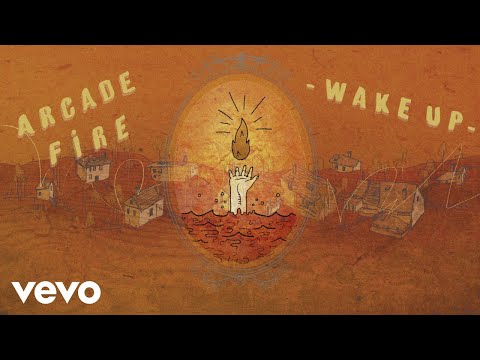
Arcade Fire
Wake Up
Read
Next narration 0:07
Narration sentence highlighting is idle.
The crowd voice hits first.
The guitars make one warm block under the voices. The drums give it a square path, almost like a march.
That opening is not just size. It teaches the ear to hear private damage inside public force.
The lead voice enters by narrowing the chant into a sentence. The band stays wide behind him. The confession still feels communal.
When the heart is filled with nothing, the arrangement is still full. That contradiction is the center of the track.
The verse stands on the moving grid and lets childhood harden into accusation.
When the wordless refrain returns, it is carrying the verse now. The same lift has more strain in it.
The title finally speaks: "Children, wake up."
Holding the mistake up matters because the whole song is public. Hidden damage is being dragged into daylight.
The rhythm gives the torn-heart line no soft place to rest.
The little-gods image flashes because the crowd sound has already made people feel powerful. The power is not clean.
"I guess we will just have to adjust" is deliberately small. The band around it is too large for the resignation. Adjustment sounds like surviving inside the machine.
The lightning-bolt image keeps childhood alive, but charged. The song has not grown out of childhood; it has made childhood dangerous.
The reaper line darkens the field right before the music changes gait.
Now the track starts to run.
The brighter motion is not escape. Wakefulness becomes propulsion here. The wound is still inside the speed.
The repeated going turns direction into a physical stutter. The crowd has become feet and bright edges.
"Look out below" snaps the ascent downward.
Last updated Aug 3, 2026
Now playing
Wake Up
Arcade Fire

galdr analysis
Click play to load galdr data.