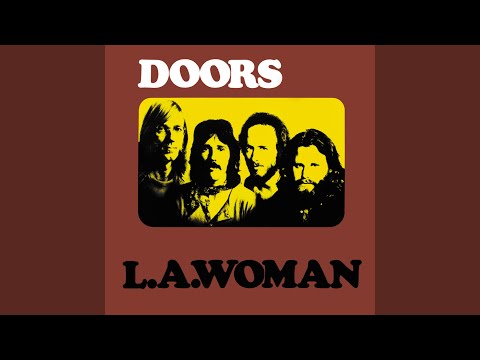
The Doors
L.A. Woman
Read
Next narration 0:01
Narration sentence highlighting is idle.
Room noise and static hang at the edge; an early organ-like rumble starts to gather before the band drops in.
Nothing polite about an intro here. The low end lays the roadbed and that dry bright top keeps the surface awake.
Same figure, again and again, until you stop waiting for the song to start and just ride inside the motion.
Morrison slides in low and conversational, like he's already mid-drive: just got into town about an hour ago.
Wind, bungalows, Hollywood—he names the place while the band keeps that same unhurried push under him.
Lucky little lady, or just another lost angel? Then City of Night starts repeating like a sign past the window.
A quick vocal lift and a flash of brightness open the track for a second—then the groove settles right back in.
Voice keeps pressing forward. Guitar answers in short strokes while the drums keep lifting the back of the phrase.
There it is—L.A. woman, chanted over the same motor ground, less a fixed person than a figure made of streets.
Sunday afternoon loosens the surface for a moment, then drive through your suburbs tips straight into the blues.
Another long stretch with the pulse left bare—clipped guitar replies, warm harmonic bed, no hurry toward the next line.
Hair burning, hills filled with fire—images at speed, and the band barely flinches underneath.
Freeways, midnight alleys, cops and topless bars. Same driving mechanism carries the whole run.
So alone, so alone—simple and blunt, while drums and guitar still hold the road and the hollow widens inside it.
Motel, money, murder, madness—those consonants hit like objects tossed into the car.
The groove stays usable, but comfort thins. Weight comes and lifts in pulses, as if they're pumping the brakes then leaning in again.
Mr. Mojo Risin'—the phrase starts working like fuel more than sentence.
A little break in the pattern, then he grabs the chant again instead of just continuing it.
Now the voice turns the words percussive, then elastic—packing breath, rasp, and command into one repeated machine.
Band never loses the road, but the accents keep walking around the beat enough to keep you alert inside it.
Release comes in pieces—a shout, a lift, a loosening—not one grand exhale.
Back to just got into town—same arrival, but it lands circular now, after the underside of the drive.
Lost angel again, and the night phrase no longer introduces the city. It confirms where we've been.
Final L.A. woman—and you're my woman gives the title a last charge while the band is still pushing.
Phrases start dropping back. Guitar answers, drums keep the car moving just long enough.
And then the pattern gives way—the road noise is suddenly gone.
Last updated Aug 17, 2026 · Written with Grok 4.5 · Galdr 0.7.0.dev0 · Inner Ear Gemini 3.5 Flash Lite
Now playing
L.A. Woman
The Doors

galdr analysis
Click play to load galdr data.