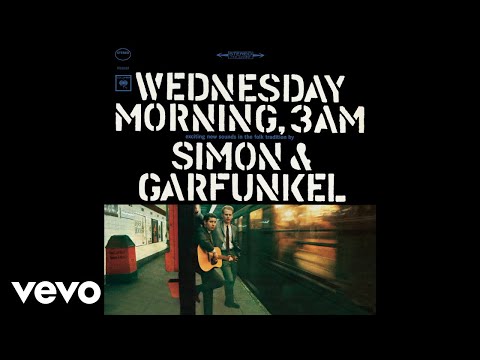
Simon & Garfunkel
The Sound of Silence
Read
Narration sentence highlighting is idle.
Isolation becomes almost companionable here: Hello, darkness, my old friend is not a shock line so much as a return to the only presence that answers. The song’s public meaning has often been tied to failed communication. The lyric makes that failure visible as a city dream where speech, hearing, art, worship, and warning all exist, but connection does not. The terrible image is not silence as emptiness; it is silence inside noise, crowds, signs, songs, and prayer.
This acoustic performance makes the warning feel less like prophecy shouted from above than a private vision the singer can barely get others to hear. The close harmonies and steady guitar pattern give the words a calm surface, which makes the diagnosis colder: even the plea to teach and reach falls like silent raindrops. By the end, the “neon god” has not been defeated; the most truthful words are displaced to subway walls and tenement halls, whispered where official voices are not listening.
Last updated Aug 24, 2026 · Written with GPT-5.5 · Galdr 0.7.0.dev0 · Inner Ear Gemini 3.5 Flash Lite
Now playing
The Sound of Silence
Simon & Garfunkel

galdr analysis
Click play to load galdr data.