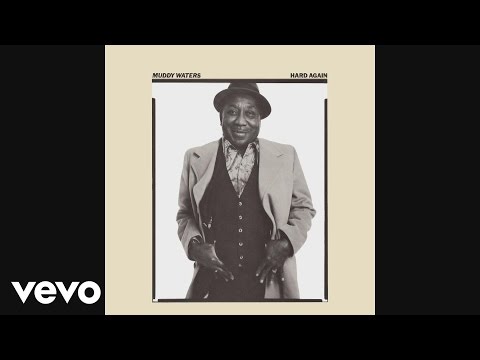
Muddy Waters
Mannish Boy
Read
Narration sentence highlighting is idle.
The first sound is almost nothing—a brief empty room—then Muddy’s voice tears the air open, a long raw Ooooooh that sits thick and chest-forward before the band answers. The stop-time figure lands hard and clean: guitar and bass strike together, drums punch the same instant, and the whole thing freezes so the voice can fill the hole. That pattern becomes the room’s law within seconds. Every hit is the same chord, the same weight, the same brief silence after the attack. The body locks to it without effort; the pocket is settled and light, more snap than drag, a slow martial pulse that refuses to hurry.
His voice works like another percussion instrument. It doesn’t float above the band so much as occupy the rests the riff leaves open. Grainy, close, half-spoken and half-shouted, it leans into the microphone with chest mass and then pulls back, letting the band’s next strike reseal the space. Background shouts—_Yeah! Whoo!_—flash bright and short, little pressure spikes that vanish as fast as they arrive. Underneath, the low end stays spare and firm: bass notes land on the hits and disappear, drums keep the grid elastic but reliable, never crowding the open air between strikes.
For long stretches the surface barely changes. The riff repeats with almost ceremonial patience. Guitar edges stay dry and mid-forward; nothing blooms into sustain or wash. Density stays open—plenty of room, little clutter—so each vocal entrance feels larger than its volume. When the spelling game begins, the stops grow more theatrical: single letters hang in the air while the band waits, then the whole ensemble snaps back in on the downbeat. The motor grip never loosens. Even when the voice softens into story, the stop-time figure keeps seizing the body on every return.
Later the same architecture simply continues to hold. Phrases lift a little higher, shouts thicken, the voice presses harder into the presence band, but the underlying machine stays identical—hit, freeze, voice, hit. Weight gathers only in small waves under the pulse and lifts again; nothing ever becomes heavy. The groove’s comfort is plain and physical: you can sit inside it for minutes without bracing, captured yet unpressured.
Near the end the hold finally frays. Pressure releases, the motor grip loosens, pattern breaks scatter across a few seconds, and the voice thins into the room. A final laugh and brief room reaction take the last space before the cut to silence. The riff doesn’t climax; it simply stops working, and the silence that follows is absolute.
Last updated Aug 16, 2026 · Written with Grok 4.5 · Galdr 0.7.0.dev0 · Inner Ear Gemini 3.5 Flash Lite
Now playing
Mannish Boy
Muddy Waters

galdr analysis
Click play to load galdr data.