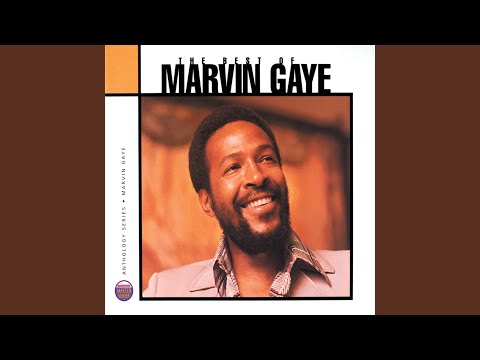
Marvin Gaye
I Heard It Through the Grapevine
Listen on YouTubeA brief blank space comes first, then the track snaps into a narrow lane. The beat is not huge, but it is strict enough to put the body on notice. A clipped rhythmic figure keeps returning like a thought that has already decided where it will go. The low motion is lean, the percussion dry, and the whole opening feels built from small, repeated insistences rather than display. Before the voice arrives, the song has already made a rule: time will move forward in even steps, and whatever pain enters will have to keep walking.
Marvin Gaye comes in with "Ooh-ooh, I bet you're wondering how I knew," and the vocal does not relax into confession. It leans slightly ahead of privacy, as if the news has pushed him into speaking before he has arranged himself. The line about "your plans to make me blue" lands inside a groove that refuses to soften for it. That is the first real friction I hear: the singer is wounded, but the arrangement keeps its face composed. The pulse catches the hurt and makes it public.
The backing voices answer him with a cool steadiness. When he sings "It took me by surprise, I must say," their repetition makes the surprise feel rehearsed by everyone except him. The track’s surface stays open enough for each vocal entrance to cut through. Nothing crowds him, but nothing gives him much shelter either. The famous line, "I heard it through the grapevine," does not arrive like a revelation; it arrives like the thing the groove has been circling from the first bar. The rumor is rhythmic before it is narrative. It repeats because the body has already learned the shape of it.
The chorus tightens without exploding. "Not much longer would you be mine" pulls the emotional floor out, but the band keeps the same forward discipline. I hear the arrangement as a machine for containing panic: bass and drums moving with almost impersonal reliability, hand percussion or bright strikes marking the top edge, voices folding in around the lead without swallowing it. Then he reaches "Oh, I'm just about to lose my mind," and the phrase opens wider than the beat will allow. The mind may be loosening; the record is not. That mismatch is where the ache lives.
After the first chorus, the track drops back rather than resets. The same motion continues, but the second verse carries more weight underneath it. "I know a man ain't supposed to cry" brings a social rule into the room, and the music answers by staying tight, almost severe. The tears are named, but the pulse does not blur. When he says "these tears, I can't hold inside," the voice strains against the arrangement’s clean frame. It feels less like release than pressure finding a thin seam.
There is a small lift around the repeated accusation, "You could have told me yourself," and the backing voices make it sting by echoing it. They do not console him. They turn his sentence back toward him, polished and precise. The groove keeps catching the end of each phrase, so the song never spills into free lament. Even the hurt has to land on time. The line "That you love someone else" darkens the harmonic air without making the track heavy; the motion stays quick, but the space around the voice feels more shadowed.
The bridge-like turn into "People say believe half of what you see / Son, and none of what you hear" changes the listening angle. The song has been driven by rumor, and now it pauses inside doubt without actually slowing down. The pulse remains steady, but the words make the ground less trustworthy. "But I can't help being confused" is sung inside a pattern that is anything but confused, and that contrast sharpens the lyric. The arrangement keeps its certainty while the singer loses his. I keep hearing the grapevine as a network made of rhythm: repeated, reliable, impossible to verify, impossible to ignore.
By the final stretch, the returns feel less like choruses than repetitions of a trapped conclusion. "Baby, I heard it through the grapevine" comes back with the force of something he cannot stop testing against the same beat. The backing voices move in short, bright confirmations, and the lead vocal presses through them with more exposed edges. Around the last half-minute, the track begins to loosen in tiny steps: phrases lift, drop, lift again, as if the arrangement is letting the held shape fray at the corners. There is a release near the end, but it is brief and practical, not healing. Then the pattern breaks, the body-lock recedes, and silence takes the song before the feeling has solved itself.
The whole recording moves like controlled alarm. Its power is in the way the groove holds one line of motion while the lyric keeps discovering betrayal from different angles. The harmonic color stays warm enough to invite closeness, but the repeated figure and disciplined beat make that closeness feel watched, reported, passed along. I leave it still hearing the gap between the voice about to lose its mind and the track that will not lose count. That gap is the song’s lasting pressure: heartbreak made to walk in perfect time.
Listening Signal

Galdr analysis
Click play to load Galdr data.
Now playing
I Heard It Through the Grapevine
Marvin Gaye

Click play to load Galdr data.
Music signal
Harmony + melody
Galdr concepts
Derived motion