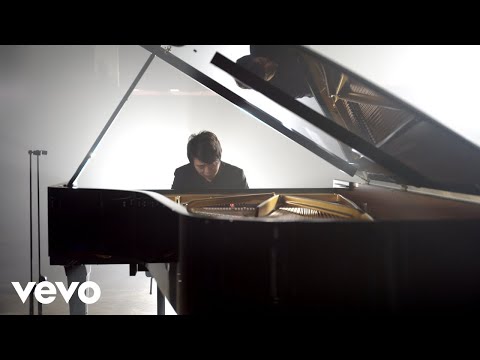
Bach
Goldberg Variations, Aria
Read
Narration sentence highlighting is idle.
The first notes arrive almost as if the room itself has decided to speak: a solitary harpsichord, plucked rather than struck, laying down a bass that walks with the patience of someone who already knows the way home. Above it the melody opens in measured steps, each ornament a small turn of the wrist—trills that bloom and vanish into the natural decay of the strings. Nothing crowds the air. The surface stays thin and luminous, harmonic warmth carrying more weight than any percussive edge.
By about 0:32 the two hands have settled into their long conversation. The left keeps its steady, almost ceremonial tread while the right traces arches that rise, hesitate, and settle again. Phrases lift and drop back without ever breaking the held field; the pulse is present enough to follow, yet the body is invited only lightly, more sway than grip. Ornaments gather at the crests like light catching on wire, then release into soft cadences that leave the room still ringing.
Around the first major close the music takes a brief breath, then the second half opens a shade higher, more reflective. A minor-flavored turn darkens the color for a moment without changing the pace. Counterpoint weaves closer—bass stepping upward to meet the melody, lines intertwining with gentle rubato flex that lets the time breathe rather than march. The pattern never loosens its hold; even when the surface deforms under a little local drift, the larger shape remains intact, suspended and sure.
Near 2:00 the opening material returns with the same tenderness, now carrying the memory of everything that has already unfolded. Trills decorate the upper voice while the lower register keeps its warm floor. The listening becomes less about surprise and more about recognition: the same sarabande gait, the same ornamental grace, yet each restatement slightly altered by touch and timing, as if the player is thinking the phrase again rather than repeating it. Pressure builds and releases in small waves—never dramatic, always interior—until the whole texture feels like one long, held exhalation shaped into song.
In the final stretch the phrases continue their measured descent and lift, ornaments still catching the light, until attention itself begins to loosen. Around 5:26 the body lock eases, the pattern frays at the edges, and the last cadential steps simply stop sounding. Silence takes the room completely, long enough that the final resonance has already become memory before the recording ends.
Last updated Aug 16, 2026 · Written with Grok 4.5 · Galdr 0.7.0.dev0 · Inner Ear Gemini 3.5 Flash Lite
Now playing
Goldberg Variations, Aria
Bach

galdr analysis
Click play to load galdr data.