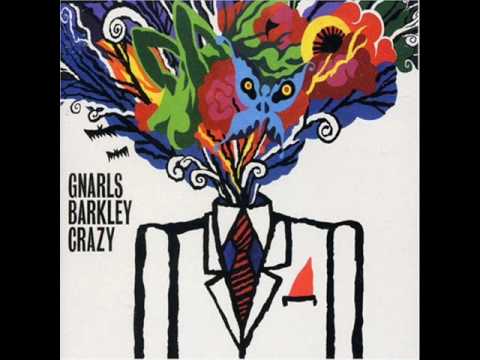
Gnarls Barkley
Crazy
Read
Narration sentence highlighting is idle.
0:00-0:36 Establishes the contract and tightens it toward the question
A brief opening silence gives way to the groove almost immediately; the voice enters at 0:04 with I remember when. The first verse sets the track’s main bargain: steady motion underneath a vocal line that keeps narrowing from memory into explanation. Around 0:21 the lyric turns outward — when you’re out there — and by 0:32 the phrase I just knew too much functions as the ramp into the refrain.
0:36-0:55 Proves the refrain
The first chorus does not change the song’s materials so much as concentrate them. The repeated Does that make me crazy? fixes the title phrase as the central formal hook, with Possibly acting as a short release rather than a full answer. The section ends cleanly enough for the next verse to restart the argument.
0:56-1:28 Reloads the verse and redirects the accusation
The second verse returns the same forward motion, but the lyric stance shifts from confession to address: I hope that you are having the time of your life, then who do you think you are. The form uses the repeated verse space to move the question away from the singer alone and toward another person, preparing the chorus to return with altered pronouns.
1:28-1:47 Returns the refrain with the frame widened
The chorus comes back as I think you’re crazy, then closes with Just like me. That change matters formally: the hook is no longer only self-diagnosis or accusation, but a shared condition. The repeated chorus slot proves that the same refrain can carry a new relationship.
1:47-2:19 Opens a bridge-like life story, then narrows back to the hook
The My heroes had the heart passage leaves the direct chorus cycle for a broader explanation of inheritance and aspiration. It stretches the song’s logic backward into childhood and example, then compresses again through I can die when I’m done, setting up the final refrain as a conclusion rather than another pass.
2:19-3:01 Resolves by expanding the pronouns, then fades out
The last chorus moves through Maybe I’m crazy, Maybe you’re crazy, and Maybe we’re crazy, ending on Probably. After the final sung answer, the track does not introduce a new section; it lets the established pattern withdraw through an outro fade until the sound empties into silence near 2:58. The whole form turns one question into a widening circle: me, you, us.
Last updated Aug 22, 2026 · Written with GPT-5.5 · Galdr 0.7.0.dev0 · Inner Ear Gemini 3.5 Flash Lite
Now playing
Crazy
Gnarls Barkley

galdr analysis
Click play to load galdr data.