Ex Deo
I, Caligvla
Read
Narration sentence highlighting is idle.
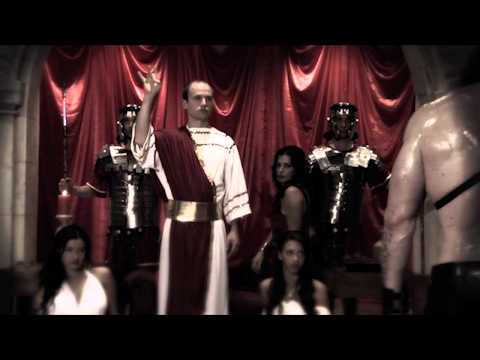
Caligula speaks as living god and executioner at once: flesh that demands worship while promising only rope, blood, and waste. The song is less a portrait than a throne speech—I, Caligvla as title and first claim—where imperial divinity and private revenge collapse into one mouth. He names the murder of his parents, then answers with Rome itself: traitors crucified, women and children thrown from the Tarpeian rock, unheard voices buried in his dominion. The lyric logic is pure command—bow, whisper domination, kneel—until I am god stops sounding like metaphor and starts sounding like policy.
Symphonic death metal makes that policy ceremonial. Choir and brass dress the boast in imperial scale while the harsh voice keeps a butcher inside the pageant; the whispered lines of domination and insanity pull the mask closer before the wall returns. What sticks is not tragedy or apology but the clean residue of absolute rule: fear as worship, blood as proof, and Rome wearing one man’s face.
Last updated Aug 18, 2026 · Written with Grok 4.5 · Galdr 0.7.0.dev0 · Inner Ear Gemini 3.5 Flash Lite
Now playing
I, Caligvla
Ex Deo

galdr analysis
Click play to load galdr data.