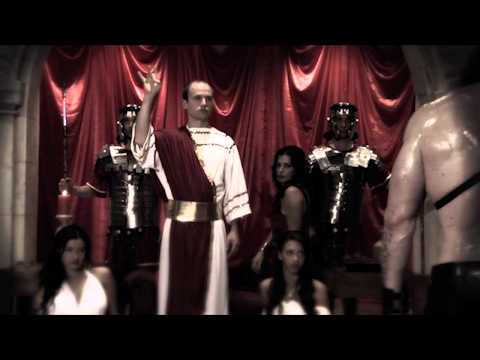
Ex Deo
I, Caligvla
Read
Narration sentence highlighting is idle.
0:00-0:42 Orchestral prologue establishes the imperial scale
Brass, low percussion, and choir build the track’s public frame before the metal song proper arrives. Around 0:25 the pressure eases into a more suspended passage, then strips back toward low brass, delaying the first band entry rather than spending the opening as a simple intro count-in.
0:42-1:12 Band entrance and first decree
The guitars and drums enter and settle the main motor pattern. The harsh vocal arrives soon after, turning the orchestral frame into direct proclamation: I, Caligvla becomes the first formal contract, not just a lyric image. This section establishes the song’s main alternation between imperial address and locked metal drive.
1:12-2:12 Main body proves the command pattern
The track keeps the vocal assault inside a stable, forceful pocket while the lyric moves from self-coronation into threat and dominion. Repeated declarative shapes do the formal work here: the song does not need a new scene yet, because the repeated commands and accusations keep tightening the same authority claim.
2:12-2:56 Whisper break narrows, then reloads
The whispered whisper, whisper, whisper passage changes the section’s function sharply: the voice contracts from public roar to close command while the backing lowers just enough to make the words feel like a different mode of control. By the end of the span, the heavy pattern gathers again and the harsh voice returns, paying off the narrowed middle without abandoning the main frame.
2:56-3:40 Return and lead break extend the same contract
The song resumes its heavy vocal drive, then hands the foreground to a guitar lead around the middle of the span. This is not an escape from the form; it extends the established force instrumentally, letting the riff cycle and solo activity carry the command structure before the voice-centered drama changes again.
3:40-4:49 Final reset, last kneeling command, and cutoff
After the solo/riff return, the track moves toward a late thinning and spoken-cinematic interlude, emptying the frame enough to make the final re-entry count. Around 4:20 the heavy materials return for the closing command sequence: Kneel, kneel and for I am god. The pattern breaks down after about 4:39, and the last seconds release into decay rather than a rounded cadence.
Last updated Aug 18, 2026 · Written with GPT-5.5 · Galdr 0.7.0.dev0 · Inner Ear Gemini 3.5 Flash Lite
Now playing
I, Caligvla
Ex Deo

galdr analysis
Click play to load galdr data.