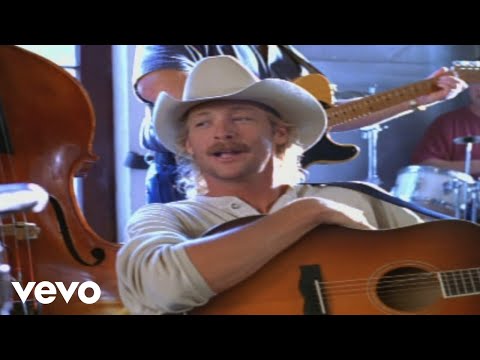
Alan Jackson
Little Bitty
Read
Next narration 0:05
Narration sentence highlighting is idle.
Already moving at small scale—bright guitar, plain beat, that quick country trot locked in.
Voice comes in listing little things: honeymoon love, a dish, a spoon.
House, yard, dog, car—he just keeps stacking them while the band stays light underneath.
"Little bitty" lands like a beat of its own, and the music stays porch-height with it.
Hometown or city, share or smile—same square bounce carrying the counsel.
Just a short instrumental turn—no big lift, the trot never really leaves.
Same stride, new shelf: baby in a gown, little town, yellow bus, books.
It all traces back to a little look, and the groove still refuses to brood.
Title refrain again—permission, not a bigger arrangement.
That little "Hey" pops the surface, then he's right into job and a little bitty check.
Six-pack, TV set—fiddle and guitar answers brighten the edges without fighting the beat.
World going around and around, and even "silence and sound" stays counted into the trot.
Good ol' boy, pretty little girl—cycle folds back toward starting over on the same bounce.
Plans and dreams get sanded down to the same small measure as dishes and yards.
Last refrain trusts the pattern—no revelation, just the phrase and that square beat again.
Life goes on for a little bitty while, and the band still won't swell past itself.
A quick "Woo," then the grip loosens—ending flicks away with almost no afterglow.
Last updated Aug 21, 2026 · Written with Grok 4.5 · Galdr 0.7.0.dev0 · Inner Ear Gemini 3.5 Flash Lite
Now playing
Little Bitty
Alan Jackson

galdr analysis
Click play to load galdr data.