Wardruna
Voluspá
Read
Narration sentence highlighting is idle.
The record opens on a low tone with a pulse already folded inside it — a drone that breathes rather than plays, some distant air moving at its edges. Seven seconds in a deep voice arrives alone above it, and the first words of the whole piece are a demand: Hljóðs bið ek allar — silence, hearing, asked of everyone. That is the contract. A frame drum edges in around the half-minute, still sparse, and by the time more voices stack beneath the chant the ritual has its full shape: quick hide-drum pulse, drone, and words delivered more recited than sung, like testimony rather than melody.
The first surprise is how quickly the gathering undoes itself. At 1:03 the drum stops outright, and nothing is left but voice and drone. The words floating in that bare stretch are the oldest in the poem — no earth yet, no sea, no sky, a yawning gap and no grass anywhere — and the arrangement answers them by emptying. Low vocal harmony swells beneath the chant with no rhythm under it at all, and for a while the prophecy just hangs there. It's the first proof that this music breathes with its text.
When the drum returns, the chant climbs with it, and around 1:59 the stacked voices and hide-beats reach their loudest pile. The line riding that surge is the sun going black. What keeps the moment from mere spectacle is the voice: it never screams. The drum carries the catastrophe — heavy, insistent, its strikes landing a shade early and a shade late, leaning across the beat the way a live hand does — while the chant above stays level, almost calm, someone reporting a thing already seen. The body is in the drum's grip here, but there is no seat in it; you are held, not settled. Two and a half minutes in the drum cuts again, and the cycle turns over: a soft chant, then long bowed-string tones bowing through the drone, then the voice rising into a higher, keening register.
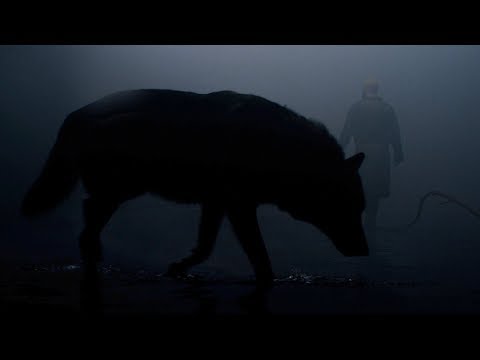
The prophecy's middle is wolves howling at the cave-mouth, the fetter snapping, the world-tree shuddering as the old giant breaks loose — and the music answers with its longest unbroken run of drum and voice, roughly from the fourth minute nearly to the fifth. The remarkable part is what doesn't happen. No new material, no escalation into a bigger climax; the same pattern, run deeper. The strikes keep walking around the grid, the voices keep layering, and it is the grip rather than the volume that tightens. Repetition here isn't a loop — it's a toll being counted, and nothing is paid.
Then the words turn. She watches a green earth rise out of the sea, waterfalls falling, an eagle hunting above them, and the drum finally falls away. The chant thins to something soft and unforced, and at 5:16 the voice stops altogether, leaving only drone and a faint string resonance — the first true stillness since the opening. Close to six minutes the voice returns changed: warm now, unhurried, over plucked strings, carrying the last vision of Sal sér hon standa — a hall standing brighter than the sun, roofed in gold, where the good are to dwell. After all that hammering, the prophecy closes as a lullaby.
The ending is an exhale six minutes wide. Around 6:14 the pattern that has run almost without break since the first seconds finally gives, and the pressure that was never once spent moves all at once. Every other element came and went across the piece; the drone was the one sound that stayed from first second to last, and it is the last to go, thinning into actual silence — the very silence the opening line asked for.
Last updated Aug 17, 2026 · Written with GLM 5.2 · Galdr 0.7.0.dev0 · Inner Ear Gemini 3.5 Flash Lite
Now playing
Voluspá
Wardruna

galdr analysis
Click play to load galdr data.