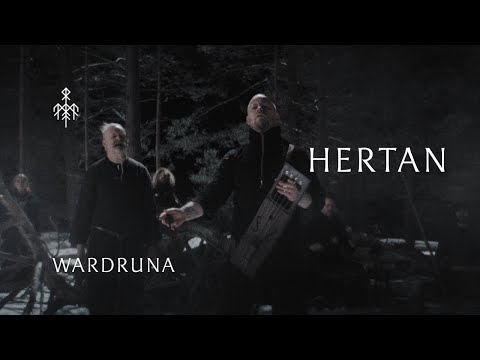
Wardruna
Hertan
Read
Narration sentence highlighting is idle.
The track opens as if the floor has to be remembered before it can be used. Low tone and voice gather in a narrow space, with the pulse only partly available. Nothing feels empty, but the music is still returning to itself, drawing weight into the room before it asks the listener to move.
At 0:24 the body of the song arrives. The drum gives the step a reliable place to land, and attention locks almost at once. The beat is steady, but not sleepy; small accents lean around the center and keep the walk alive. The first sung world is one of inward descent, skin, blood, thought, disappearance. A tiny fragment like "eg forsvinn" does not need to explain itself to be heard as vanishing. The voice enters the rhythm and darkens it.
By 0:40 the main engine has settled. Drum, chant, and low warmth make one long path rather than a sequence of scenes. The lyric keeps returning to images of steering, sinking, soil, darkness, and seed-like survival, and the arrangement answers by staying low and patient. The song does not dramatize transformation as a leap upward. It makes transformation feel like remaining inside the same step until the step changes the listener.
Around 1:43 the phrase drops back without breaking the trance. The track has room around every hit, and that space matters because the pattern is so firm. The ear hears a stable road, but the surface keeps shifting enough to prevent comfort from becoming numbness. The repeated call "Hertō rādiþ" lands less like a chorus than a command placed inside the hollow of the rhythm.
At 2:29 the line lifts again. The music rises inside its dusk, not out of it. Voices and tonal color gather around the center while the drum keeps its unhurried authority. The lyric logic is still descent and endurance: outer layers giving way, strength found down in "mold og myrke". The music makes that believable by refusing panic. It can move through darkness because the pulse never loses the path.
The long middle span is the test. From the low 3:00s through 5:30, the track keeps circling the same ritual engine, but the surface is not static. Weight gathers, lifts, and returns in small waves; the body remains captured while the ear keeps making tiny corrections. Animal and elemental images pass through the vocal world, but the arrangement does not turn them into separate pictures. It keeps one movement going until "Går i hi" feels like another form of survival rather than retreat.
Near 5:56 the pattern finally loosens. The line breaks in small fractures, attention drops, and the body that has been walking for minutes suddenly has less ground under it. This is not a triumphant release. It is the grip being withdrawn. A few seconds later the pressure falls away, and the ending gap becomes part of the experience because the song has spent so long teaching the listener to trust the step.
"Hertan" leaves behind the discipline of a controlled descent. It strips down by repetition, not by collapse: voice, drum, low warmth, and ritual phrase holding together until the last support is removed. The return from darkness is not announced as victory. It is the fact that something kept moving long enough to come out changed.
Last updated Jul 14, 2026
Now playing
Hertan
Wardruna

galdr analysis
Click play to load galdr data.