Wardruna
Lyfjaberg
Read
Narration sentence highlighting is idle.
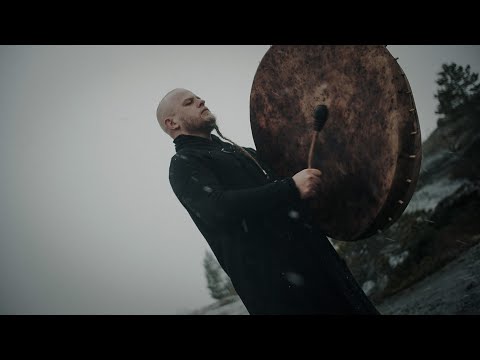
The first thing is not a sound but a room. A low drone opens like a door left ajar onto cold air, and for a few seconds that is all — the hum of something sustained and dark, patient enough to feel geological. When the first wooden percussion enters around 0:18, it doesn't start so much as surface, the way a heartbeat becomes audible once you go still. A hand drum finds a moderate pulse and settles into it, and the drone stays underneath, and that relationship — steady rhythm over held tone — is the contract this song will keep for nearly its entire length. It is ritual music, and the ritual is in the repetition.
Voices arrive softly, chanting in a register that feels more communal than performative. The vocal layers thicken gradually, and by the time the first clear lyric arrives — saddle your soul and let it ride — the voice has already been living inside the drum pulse for long enough that the words feel like they grew there. What follows is a journey narrative, and the music does not dramatize the journey. The drums thin out around 1:30, leaving the voice nearly alone over the drone, and the effect is not a withdrawal but a narrowing of the path. When the percussion returns, it returns as the same heartbeat, unchanged. The song trusts the pulse to carry everything.
The lyric structure builds a ritual of subtraction. Three times the traveler reaches a crossroads and pauses, and each time something is left behind: first clothes and possessions, then time and weighty thoughts, then fears and masks. The music does not escalate across these three stations. The drum pattern holds its shape, the vocal delivery keeps the same warm, measured tone, and the steadiness becomes the point — the mountain does not change as you climb it; you change. The burden lightens, but the trail stays heavy, and the song makes that paradox audible by refusing to lighten its own texture in sympathy.
A new color enters around 3:50 when strings arrive underneath the vocal line, and for the first time the harmonic surface shifts from pure drone-and-drum warmth toward something more melodic and airy. The strings carry a brief instrumental passage while the voices rest, and the percussion pulls back to light taps. It is the closest the track comes to beauty in a conventional sense — graceful, almost tender — and it passes quickly. When the voice returns around 4:45, the journey reaches its summit and moves through the shadow-women and wounds before the summoning begins. Around 5:34 comes I summon you into the mountain blue, and then forest, sea, stone, rivers, tides — a cascading list of places where sickness can be sent away, each image delivered over the same unwavering pulse. The drums push forward here, the backing vocals swell, and the density thickens without the fundamental rhythm ever losing its grip on the body.
The final section names the mountain directly. Healing-hill stands for eternity, and the voice carries the declaration with the same measured warmth it has used throughout, as though the mountain's permanence and the song's persistence are the same quality expressed in different materials. The last lines describe rivers dancing northward and down, and the music begins its own slow descent. Around 7:45 the weight lifts, and the percussion eases, and the pulse that has held the body for eight minutes starts to loosen its fingers. A single vocal note hangs in the air and fades, and then silence — not a dramatic cutoff but a long exhale, eighteen seconds of room tone that lets the ear adjust to the absence of the drum it has been living inside. The mountain was always going to outlast the climb. The song simply stops climbing and lets you hear that.
Last updated Aug 14, 2026 · Written with GLM 5.2 · Galdr 0.7.0.dev0 · Inner Ear Gemini 3.5 Flash Lite
Now playing
Lyfjaberg
Wardruna

galdr analysis
Click play to load galdr data.