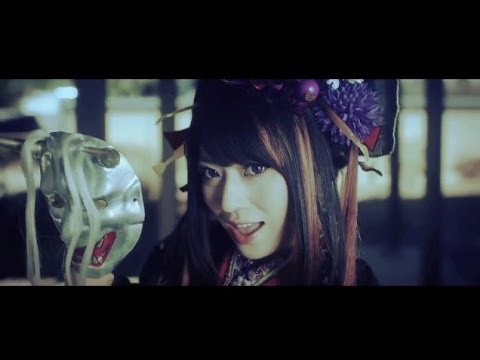
Wagakki Band
Senbonzakura
Read
Narration sentence highlighting is idle.
The first few seconds sit in readiness before the track takes off, and when the sound arrives around 0:06 it is already moving fast: bright plucked and struck traditional colors cut against rock-band force, the beat set firm enough that the body catches it almost immediately. The opening vocal comes in not as a cautious entrance but as another blade in the arrangement, clean and forward over the racing surface. When the title image appears, Senbonzakura, the music does not soften into scenery; the thousand cherry blossoms are thrown into motion by drums, guitar weight, and sharp wagakki attack.
That early chorus-like statement is all velocity and spectacle. The melody rides high while the accompaniment keeps a martial regularity underneath it, and the lyric’s unreachable voice is oddly matched by how crowded the mix is: there is so much sound rushing forward that absence has to be shouted into the middle of it. After the first vocal burst, the instrumental writing keeps the same command of time. Guitar and traditional strings flash in quick figures, not as decorative alternation but as a shared engine, with the rock edge thickening the room while the Japanese instruments keep the surface bright and serrated.
Near 0:47 the texture pulls into a more rhythmically exposed passage, less a drop than a tightening of the frame. The beat remains fast and usable, but the emphasis shifts toward drum pattern and instrumental punctuation, giving the returning vocal more spring when it enters. The verse imagery is a collage of revolution, vehicles, exorcism, and weaponry, and the music treats that pileup as momentum rather than narrative explanation. The syllables snap through the grid; the arrangement answers with accents that lean around the beat without ever seriously disturbing it.
The return to Senbonzakura around 1:20 feels recognizable but heavier because the song has spent the verse winding the spring. The vocal line opens wider, the band presses forward, and the traditional timbres keep flickering at the edges like sparks from the groove. The lyric’s steel cage and scaffold imagery darken the celebration, but the music resists becoming grim. It turns danger into procession: bright, fast, communal, almost parade-like, with the singer’s clear projection preventing the density from swallowing the line.
The second cycle pushes that same contract harder. Around 2:10, the count-like phrasing and march references make the motor feeling explicit; the song is already moving like a regimented festival, and the words briefly catch up to what the drums and pulse have been doing all along. When the chorus returns again, the changed phrase toward a flare or signal gives the vocal a more outward aim. The sound is still crowded, still gleaming, but the upward gesture in the lyric meets the arrangement’s lift instead of fighting it.
The instrumental stretch after the second chorus is where the hybrid identity feels most physical. Fast lead figures trade across guitar brightness and wagakki bite, and the surface hardens around 2:58 while the underlying pocket stays steady. Nothing drifts; the track’s pleasure is in how much detail can be thrown at a pulse without knocking it over. The later vocal return around 3:32 gathers the familiar refrain one more time, but now the line about the scaffold changes direction—down from looking over it into leaping from it—and the music answers by staying airborne rather than collapsing.
In the final refrain, kimi ga utai boku wa odoru lands like the song admitting its own bargain: you sing, I dance. That is what the arrangement has been enforcing from the beginning, a bright command that is also an invitation. The last push keeps the guitars, drums, and traditional instruments packed together until the ending cuts the motor loose around 4:27. A final ring and cymbal decay hang for a moment, then the track leaves actual silence behind, startling mostly because the pulse had made stopping feel almost impossible.
Last updated Aug 20, 2026 · Written with GPT-5.5 · Galdr 0.7.0.dev0 · Inner Ear Gemini 3.5 Flash Lite
Now playing
Senbonzakura
Wagakki Band

galdr analysis
Click play to load galdr data.