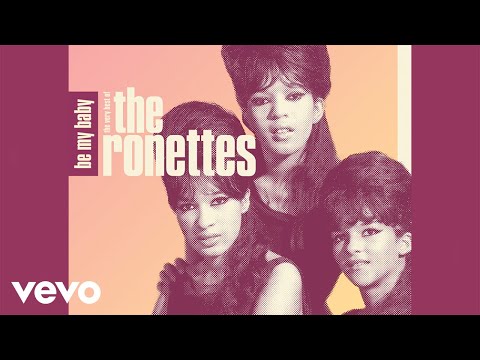
The Ronettes
Be My Baby
Read
Narration sentence highlighting is idle.
The first thing is that drum figure, alone enough to feel carved into the air: boom, ba-boom, pop. It does not ask for permission; it gives the whole record its stride before the voices arrive. Almost immediately the room fills around it — handclap brightness, low thump, piano-and-guitar mass, percussion sparkle, the reverberant studio bloom turning separate hits into one forward-pushing surface. The pulse is quick but not frantic. It has that parade-step certainty, a body lock with a smile on it.
Ronnie Spector enters around 0:09 with The night we met, and the record changes scale. The backing is already large, but her voice makes it personal rather than monumental: clear, slightly pleading, young without being small. She does not have to oversing the need in the lyric, because the arrangement has already made need physical. The beat keeps moving straight ahead while the words are all promise and possession — if she had the chance, she would never let go. Music and lyric tighten around the same idea: the track itself does not let go either.
The first chorus opens at 0:36 like the room has learned the title and starts answering her. The backing voices turn Be my, be my baby into a chant behind the lead, and that call-and-response is the record’s great emotional trick. Ronnie’s line is direct and exposed, asking for the beloved to choose her; the background vocals make the wish sound already communal, already ritualized, as if the street, the dance floor, and the radio are all singing the demand back. The wall of sound is dense, but the hook stays clean because the rhythm keeps every layer moving in the same pocket.
After the first chorus, the verse return does not really relax; it brightens the bargain. “I’ll make you happy” and the kiss-for-three promise ride the same steady drum command, so the lyric’s sweetness has momentum under it. There is no dreamy suspension here, no waiting in a mist. The song believes in forward motion. Even when the melody opens into those rounded “oh” shapes, the beat and percussion keep the body stepping. Romance becomes something with a backbeat and a destination.
The second chorus, landing after 1:20, feels familiar but more inevitable because the verse has raised the stakes from first sight to eternity. The same refrain now sounds less like a first request than a contract being repeated until it becomes true. Around 1:51, when the chorus material returns again, the record leans harder into accumulation rather than surprise: backing vocals, lead cries, percussion, and orchestral warmth stay packed together, and the pleasure is in how securely the machine holds. It is not a loose groove; it is a gleaming motor.
The outro lets the words break down into vowel-cries and repeated title fragments, which is exactly where the song has been heading. Specific promises give way to pure insistence. The lead voice rides above the backing responses, the drum figure still stamping its old shape underneath, and the whole track keeps its emotional pressure almost to the last instant. Then near 2:38 the hold finally releases into the tail of the room. After so much forward motion, the ending feels less like a fade than the moment the spell stops being powered.
Last updated Aug 20, 2026 · Written with GPT-5.5 · Galdr 0.7.0.dev0 · Inner Ear Gemini 3.5 Flash Lite
Now playing
Be My Baby
The Ronettes

galdr analysis
Click play to load galdr data.