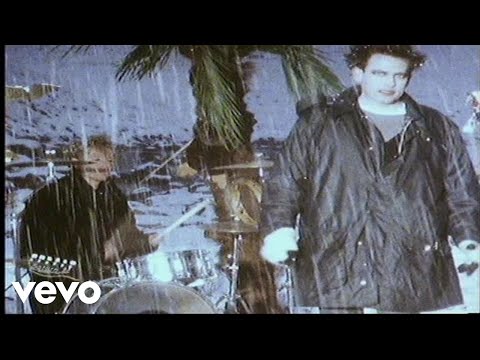
The Cure
Pictures of You
Read
Narration sentence highlighting is idle.
The first seconds make a promise before any voice appears: chiming guitars and synth haze suspended in a bright, cold room, all motion and afterimage. It is not empty atmosphere; the figures are already restless, crossing each other in clean, ringing loops. When the drums and bass enter around 0:18, they do not crash through the surface so much as give the shimmer a road. The pulse becomes steady, almost ceremonially steady, while the guitars keep throwing light sideways across it. That early Cure trick is everywhere here: the body is caught by the beat, but the heart is pulled by lines that seem to be remembering something before the singer has said a word.
The instrumental opening is long enough to change the scale of the song. Past 1:50, the weave thickens and brightens, guitars layering into a melodic weather system rather than a prelude waiting for permission. The bass keeps its forward insistence, the drums mark the same patient grid, and the upper parts keep turning the same emotional object in the hand. Nothing feels hurried, which is part of the ache. By the time the arrangement eases a little after its early crest, the song has already made memory feel physical: not a thought, not a flashback, but a pattern one has to live inside.
Robert Smith’s voice finally arrives near 2:37, soft and close compared with the wide instrumental field around him. After all that motion, the first line about staring so long at these pictures of you lands less like exposition than like the name of the room we have been in all along. The music does not retreat for the confession; it keeps moving under him, bright and regular, while the lyric admits a private collapse of reality. That mismatch matters. The band’s pulse is clear and ongoing, but the words are about replacement, about images becoming almost real because the living thing is gone or unreachable.
As the remembered scenes begin — rain, running, kissing, fear — the guitars keep their glint instead of darkening into literal sorrow. Around 3:55, when the lyric reaches screaming at make-believe and the sky, the arrangement gathers weight underneath without losing its lucid surface. Smith does not oversing it; his delivery stays controlled, almost dazed, which makes the images feel more dangerous. The track refuses the easy theater of grief. It lets the drums and bass maintain the body’s forward motion while the voice catalogs moments that cannot be recovered, and the contrast turns the song into a kind of beautiful endurance.
The later vocal stretch tightens the wound. Images of someone falling into his arms, stone-white, lost in cold and dark, pass over the same patient rhythmic hold, and the repeated remembering starts to feel less like nostalgia than compulsion. When he reaches the regret of not finding the right words, the music has not suddenly changed its nature; it has made its persistence unbearable. The line about being able to hold on to the heart cuts because the band is still holding everything else: tempo, shimmer, bass motion, drum pattern. The lyric breaks apart against a form that keeps refusing to.
The return to pictures of you after 5:58 is recognizable, but it is no longer the opening claim. The intervening memories have loaded the phrase with bodies, weather, failure, and distance, so the same idea comes back damaged. The arrangement eases slightly around the voice without giving up its motor pull, and the title phrase becomes smaller and more exposed inside a still-large sound. In the final sung passage, beginning around 7:27, desire is stated plainly — nothing wanted more than to feel this person deep in the heart — and the guitars seem to circle that admission rather than resolve it.
After the vocal leaves, the drums and bass carry the pattern a little longer, letting the machinery of memory outlast speech. The guitars continue to ring, the pulse loosens its grip, and near 8:07 the sound gives way to a long terminal quiet. It is not a dramatic cutoff; it is the last image losing contrast until there is only room tone where the pattern had been.
Last updated Aug 20, 2026 · Written with GPT-5.5 · Galdr 0.7.0.dev0 · Inner Ear Gemini 3.5 Flash Lite
Now playing
Pictures of You
The Cure

galdr analysis
Click play to load galdr data.