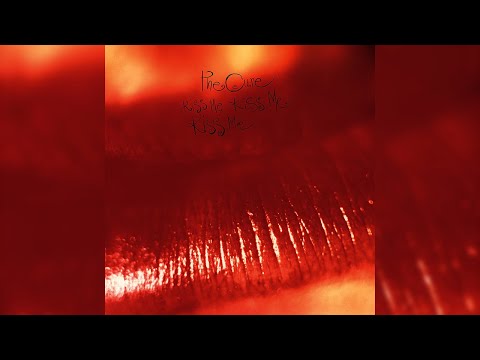
The Cure
Just Like Heaven
Read
Narration sentence highlighting is idle.
A bright, quick machinery catches almost as soon as the recording begins. The drums do not need to announce themselves for long; by the first seconds the beat has already found a clean forward lane, and the bass and guitar figures make that lane feel spring-loaded rather than heavy. The top of the track is full of glints: short keyboard flashes, chiming guitar edges, little upward sparks that keep the motion from becoming square. Everything is moving, but the movement feels usable. I can step into it.
For nearly fifty seconds, the track lets the instrumental frame teach the body what kind of time this is. The pulse is fast and exact, yet the attacks keep leaning around it, so the grid has life at the edges. The bass gives the song a light running ground, more bounce than drag. Above it, the guitar line repeats with a kind of delighted insistence, and the keyboards brighten the corners of the room without crowding the center. The arrangement is busy enough to shimmer, clear enough that each piece seems to know where it belongs.
When the voice arrives around 0:50 with "Show me, show me, show me how you do that trick," the song has already been running in place for him, waiting. He enters slightly breathless, but not swallowed by the track; he rides the rhythm as if the words are trying to keep up with the rush they describe. The repeated "show me" works like a hand tugging at the sleeve, playful and urgent at once. The drums keep the same bright shove underneath, and the guitar figure keeps circling, so the lyric’s invitation does not pause the music. It gets carried.
By the time "I'll run away with you" lands near 1:10, the promise is already physical. The line does not open into a huge release; it folds into the running pulse and becomes part of the propulsion. That is the strange sweetness here: the track makes escape sound like staying inside one perfect pattern. Nothing has to slow down for the emotion to register. The bass keeps stepping, the snare keeps snapping the frame into place, and the voice sounds lifted by the speed rather than forced through it.
Around 1:29, "Spinning on that dizzy edge" names what the arrangement has been doing from the beginning. The song is steady, but its upper parts keep rotating: guitar, keys, vocal lift, drum splash, then back into the line. The harmonic color keeps turning just enough that the center never becomes dull. It is a bright loop with a nervous rim. The lyric moves into touch and dream and distance, and the performance lets those things blur together without breaking the count.
The first "You" section at about 1:54 gathers more weight under the same motion. The word is stretched into a hook, but the track does not become grandiose; it tightens around the address. "You, soft and only" and "You, lost and lonely" feel like the voice finding different angles on the same figure while the band keeps the ground moving under him. The ocean image that follows opens the vertical space of the song. "Dancing in the deepest oceans" sounds impossible inside music this quick, but the arrangement can carry the contradiction: the rhythm runs on top while the words sink downward.
Just after 2:08, the weight briefly gathers again, then lifts. It is a small structural tightening rather than a rupture, a renewed push from underneath the established pattern. The song has no interest in stopping to prove its turns. It keeps making the same bright corridor feel newly entered, with the bass and drums renewing the body’s trust while the upper figures continue to flash and ripple. I hear the track as one extended inhale that somehow remains danceable.
Then daylight arrives. Around 2:36, "Daylight licked me into shape" changes the temperature of the song without changing its speed. The words pull the dream back toward waking, and suddenly the same bright surface feels harsher, more exposed. The vocal moves through sleep, breath, name, eyes opening, and the arrangement keeps its beautiful refusal to slow down. That refusal makes the loneliness sharper. When the sea appears again, now raging and stealing, the music is still almost radiant, and that radiance becomes part of the wound.
The return of "You" near 3:00 is no longer simply the earlier hook coming back. It is the same address after the dream has broken open. The band gives it the familiar lift, but the ear now hears the absence inside the repetition. The pulse still holds for a few more measures, bright and exact, until the pressure begins to fall away around 3:11. The ending loosens quickly: the body’s grip recedes, the last motion drains, and by 3:16 the song has slipped into silence.
The whole track teaches me its speed before it teaches me its story. First there is motion, clean and buoyant; then the voice turns that motion into pursuit, promise, dream, and loss. Its brightness never feels simple, because the lyric keeps pushing images of distance, water, sleep, and disappearance through a rhythm that refuses collapse. By the end, the same fast pulse that made running away feel possible has carried the listener straight to the empty edge after the dream.
Last updated Jul 25, 2026
Now playing
Just Like Heaven
The Cure

galdr analysis
Click play to load galdr data.