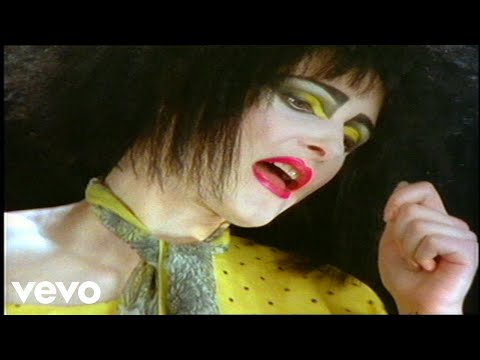
Siouxsie and the Banshees
Spellbound
Read
Narration sentence highlighting is idle.
The first seconds are all motion before explanation: bright, clipped guitar figures flicker over a quick drum pattern, wiry rather than heavy, already making the song feel chased. The pulse is fast and cleanly held, but the accents do not sit politely in a square; the guitar seems to skip and flash around the beat while the drums keep the body moving forward. It is danceable in the way a spell or panic can be danceable: not loose, not cozy, but irresistible.
Siouxsie’s voice enters into that running machinery with a strange composure. Around 0:13, the nursery image — From the cradle bars — does not soften the track; it makes the brightness sharper. Her delivery is clear and commanding, held above the jangling guitars and driving low movement, and the lyric’s childhood objects arrive already warped. When the line turns to having no choice, the band does not pause to underline the threat. It keeps moving, which is worse: the music behaves as if the compulsion has been operating since the first beat.
The verse keeps its pressure taut, then the repeated laughter and walls give the groove a room to ricochet in. Guitar and rhythm section make a narrow corridor, all forward push and flashing edges, while the vocal stays centered enough to sound almost ceremonial. By the time the song reaches the rag-doll dance near 0:56, the melody lifts without releasing the grip. The chorus-like rise feels less like arrival than capture becoming communal; the words point toward following footsteps, and the track’s motor has already made following feel physical.
What makes the return so good is that the same fast pattern feels newly inhabited after that first lift. The drums and bass keep the runway firm, the guitar keeps throwing off sparks, and Siouxsie’s voice moves between command and incantation without needing to strain. In the middle stretch, the lyric gets nastier and more fairy-tale grotesque: elders forgetting, bodies taken by the legs, the stairs waiting below. The music does not become heavier in proportion to the cruelty. It stays light on its feet, which gives the violence a wicked cartoon snap instead of a solemn darkness.
After the second verse turn, the vocal lines stretch more, and the track opens just enough for the upper edges to feel brighter. There is no grand breakdown, no big theatrical collapse; the song’s argument is its refusal to loosen. Even when the voice steps away for the instrumental passage around 2:24, the guitars and rhythm do not treat the gap as rest. They keep the spell active, a fast patterned surface with enough harmonic warmth underneath to stop it from becoming merely brittle.
The late return gathers extra weight without abandoning that wiry velocity. Near 2:56, Following the footsteps comes back as structure rather than image: the phrase has become the song’s own instruction manual. The repeated vocal rises, the drums keep driving, and the guitars’ bright agitation makes the final Spellbound feel less like a title than a diagnosis. The track does not need to explode because it has been seized from the beginning; its climax is the tightening of a motion that never really let go.
Then, just after 3:12, the pressure finally releases. The ending is abrupt enough to make the preceding speed visible in reverse: one moment the body is still being carried by the pulse, and then the hold is gone. No fade, no lingering mist, just the hard fact of silence after a song that spent three minutes proving how quickly enchantment can become a motor.
Last updated Aug 20, 2026 · Written with GPT-5.5 · Galdr 0.7.0.dev0 · Inner Ear Gemini 3.5 Flash Lite
Now playing
Spellbound
Siouxsie and the Banshees

galdr analysis
Click play to load galdr data.