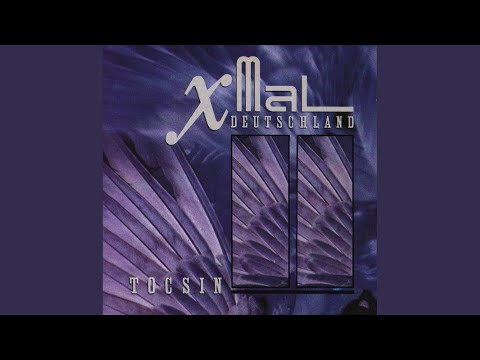
Xmal Deutschland
Incubus Succubus II
Read
Narration sentence highlighting is idle.
The track starts already in motion, with no ceremonial clearing of the throat: distorted guitar, drums, and low pressure are locked into a hard, forward pattern from the first seconds. It is not chaos, even when the surface is rough. The beat gives the body a place to move, but not a plush one; the rhythm feels drilled, a motor pocket with sharp edges, while the guitar riff darkens the room around it. When the voice enters near 0:15 with that long, raw cry, it does not introduce melody so much as possession of the space. The human sound rides the machine and makes the machine feel older, more ritual than rock stomp.
The first words turn that ritual into a scene: fools dancing, a heart of iron. The band does not soften for the image. It keeps the pulse blunt and usable, so the lyric’s grotesque theater happens over something almost march-like. That is part of the charge: the words flare mythic and infernal, but the drums and riff refuse mist. They make the occult material feel physical, like boots, breath, sweat, and a room full of bodies moving in the same narrow lane.
The title chant at about 0:52 — Incubus Succubus Succubus Incubus — becomes the track’s spell and its gearshift at once. The phrase is symmetrical enough to feel like a loop, and the music treats it that way: not as a chorus that opens into relief, but as a tightening of the pattern already underway. The voice stacks itself into the groove, clipped and emphatic, while the instruments keep their dark harmonic warmth underneath the percussive edge. When Feuer, Feuer arrives, the word matches the vocal heat, but the arrangement resists any clean blaze upward; it burns horizontally, dragged along by the same motor.
After the early chant sections, the returns matter because the track has not been wandering away from them. It has been circling, hardening, testing different faces of the same pulse. Around 2:06, the line about demons and no place in heaven lands with the music still driving rather than pleading. The lyric points upward and outward, toward exclusion and cosmic space, while the sound keeps everything low, crowded, and terrestrial. That mismatch gives the line its bite. Heaven is named, but the recording stays in the underworld of the riff.
The middle stretch works through repetition without becoming flat because the surface keeps scuffing against the grid. Attacks lean around the beat; the guitar and cymbal energy keep throwing grit across the steady pulse. The body is captured, but comfort is withheld just enough to make the dance feel compelled. When Vom Himmel fiel ein Morgenstern appears near 3:08, the fallen-star image could invite grandeur, yet the track answers with the same driving insistence. Myth is not lifted into distance here. It is hammered into pattern.
The late lyric descent — deep below, where there is no more light — finally names the place the music has sounded like all along. By 3:52, Die Energie der Nacht feels less like a new idea than a diagnosis of the whole arrangement: the night’s energy is the repeated riff, the chanted returns, the steady drum pressure, the way the voice keeps entering as command rather than confession. The final title chant near 4:10 does not need to intensify drastically to feel decisive. Its force comes from duration, from the track having held one dark motor long enough that another pass through the words feels like being pulled back into the circle.
Only at the end does the hold loosen. Around 4:37 the pattern starts giving up its grip; the body no longer has the same hard rail under it. The last sound thins into ringing residue and fade, not a grand collapse, more like the machinery losing current while the room still remembers its shape.
Last updated Aug 17, 2026 · Written with GPT-5.5 · Galdr 0.7.0.dev0 · Inner Ear Gemini 3.5 Flash Lite
Now playing
Incubus Succubus II
Xmal Deutschland

galdr analysis
Click play to load galdr data.