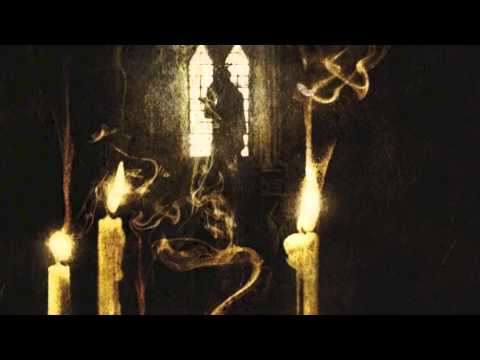
Opeth
Ghost of Perdition
Read
Narration sentence highlighting is idle.
A half-second of dark and then the track is already bearing down. The first voice erupts with "Ghost of Mother," and the band comes in as one locked block around it, guitars and drums forcing the body to accept the grid before the mind can sort the words. The heaviness is disciplined rather than loose. It does not smear outward; it runs on rails.
The opening stretch keeps its violence strangely legible. The growl sits inside the machinery, another rough edge in the same engine, while the lyric images make the room domestic and ruined at once: mother, death, a bed, a body in trouble. Small bright flashes cut across the upper surface, but they pass fast. The track wants forward motion, not ornament.
A lift comes around 0:31, then the weight gathers again beneath the pulse. This becomes the early method: the music raises its hand for a second, lets air into the phrase, and drops back into the same drive. The clean vocal passages change the size of the room without making it safe. When the voice opens into "live before you die young," the arrangement widens around the command just long enough for it to hurt.
By the time the track passes 1:50, contrast has stopped feeling like contrast and starts feeling like possession changing faces. Harsh vocal force, cleaner melodic reach, guitar mass, quick percussion, all of it stays attached to one continuous pull. The words move through venom, darkness, resistance, and inner light, but the band does not pause to underline each image. It keeps the passage in motion, which makes the story feel enacted rather than narrated.
At 2:35 the phrase drops back, and the track begins preparing the first real return instead of another immediate strike. The attack no longer fills every inch. There is still a grid, still a moving body, but the sound thins enough for the shape underneath to become clearer. This is where the song starts to show how long ten and a half minutes can be when the form is not wandering. It keeps the listener inside a corridor and changes the wall texture.
Around 3:02, the air opens. The clean section that follows feels like a memory entering the same architecture, not an escape from it. "Road into the dark" belongs here because the music is suddenly able to travel rather than batter. The vocal line steadies into something almost reflective, and the surrounding guitars loosen into a clearer, more spacious pattern. I hear the track returning to itself from a distance, winding upward without yet calling the full force back down.
That middle passage, from roughly 3:00 to 4:10, is the first place my attention changes shape. I stop bracing for impact and start following contour: the rise of a melodic line, the way harmony warms and then turns, the way the rhythm keeps the feet informed while the upper sound looks elsewhere. The track has not become gentle; it has become watchful. The danger is no longer at the door. It is walking beside the voice.
The heavy re-entry around 4:10 feels like the same force remembering its old size. Weight returns under the pulse, and by 4:30 the section has locked back into a stable runway. The guitars push in broad slabs, the drums keep the machinery precise, and the vocal severity comes back with less surprise because the quieter passage has made room for it. Opeth can leave the blast zone without breaking the chain. Every departure keeps a thread tied to the first blow.
Through the five-minute stretch, the song keeps changing its load in small lifts and arrivals. The surface is warmer in the middle than the opening might suggest, with sustained tonal mass carrying as much of the experience as the strikes do. When the lyric world turns toward "the hissing of her sanity," the music seems to understand erosion. It does not need to explode on every dark word. Some of the most unsettling motion comes from the way clean singing can sit calmly over material that has already shown its teeth.
Past 5:40 the arrangement feels more sectional, but not fragmented. A line will lift, the guitars will gather beneath it, the drums will reassert the path, and the listener is placed back on the moving belt. The phrase "ordinary days" has a strange effect when it appears inside this scale of music. It makes the horror smaller and therefore worse: not cosmic theater only, but daily speech losing coherence, a name being stained, choices narrowing under a steady count.
Around 7:06 there is another lift, and at 7:16 the groove hardens into one of the track's more gripping passages. The surface becomes more active, less smooth, with attacks walking around the barline while the main pulse remains firm. I feel the body caught by it, but not relaxed into it; the riff gives a place to stand and then keeps shifting the angle of the floor. The recurring title phrase carries more weight now because it has accumulated all the previous rooms: bed, fog, road, diary, premonition.
The section after 8:25 lets the music lift again before settling into a more usable rhythmic center near 8:36. Here the song can almost lean, almost breathe in a progressive-rock way, with the cleaner vocal world and the band's steadier motion giving the listener a seat inside the complexity. The words turn toward cause and conviction: "If one cut the source" and "everything would change." The music does not answer that condition. It suspends it.
At 9:08 the phrase drops back, then rises again around 9:30 for the final long push. The track has spent so much time proving the durability of its grid that the ending can feel both inevitable and still tense. Guitars and drums hold the last section with a familiar force, but the familiarity is not comfort. It is recognition. We have been here in different light, with different voices, under different names.
The release at 10:24 is abrupt because the preceding hold has been so continuous. The pattern breaks, and the body's attachment to the pulse recedes almost at once. Then there is terminal silence, not long enough to cleanse anything, only long enough to show that the machine has stopped. The last event is absence.
What stays after the silence is the track's refusal to separate brutality from clarity. Its heaviest passages are disciplined, and its cleaner passages remain haunted by the same forward pull. The recurring ghost and mother images do not turn the song into a plot I can safely explain; they give the musical structure a face, a bed, a road, a voice losing its name. I leave it with the sense of having been carried through a long, stable mechanism that kept changing rooms without loosening its grip.
Last updated Jul 26, 2026
Now playing
Ghost of Perdition
Opeth

galdr analysis
Click play to load galdr data.